Industrial infrastructure relies heavily on programmable logic architectures to maintain tight loop control over synchronous processes, meaning unexpected processor lockups or bus faults create systemic bottlenecks across production lines. Resolving these localized hardware hardware breakdowns requires systematic diagnostic tracing, advanced fieldbus protocol analysis, and component-level circuit board remediation to prevent secondary failures.
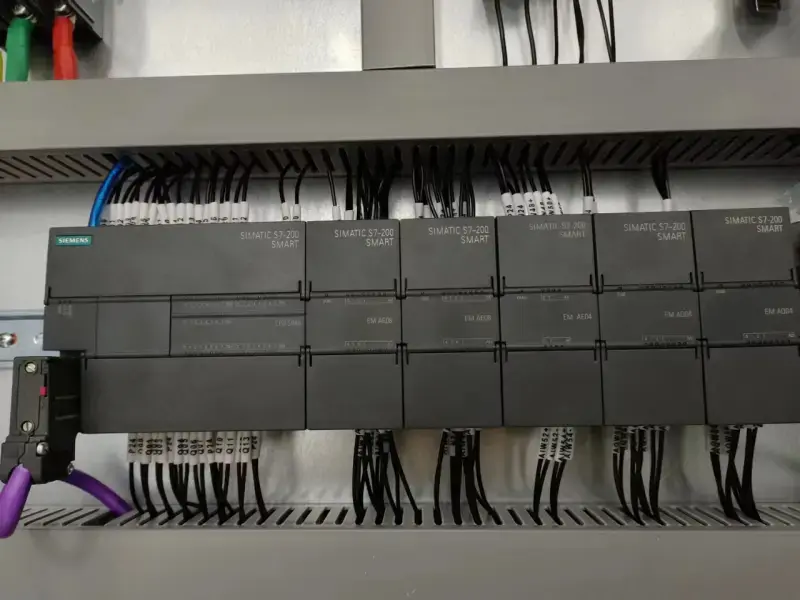
When a central processor experiences internal card degradation or loses communication links with remote distributed input output racks, initiating a comprehensive siemens plc repair diagnostic sequence allows field technicians to isolate whether the failure stems from power supply ripple voltages, optocoupler breakdown, or corrupted sector boots. For automated lines utilizing integrated logic and speed control architectures, pairing this diagnostic approach with a comprehensive plc drive repair protocol ensures that both control word processing and heavy-duty power electronics modules function in tandem to mitigate prolonged assembly line halts.
Typical Failure Modes and Diagnostics
Fault Point 1
Operational Symptom: Microprocessor memory allocation failure or total configuration block wipe after a prolonged facility shutdown.
Fault Code: OB121 Programming Error / Flashing Red STOP LED.
Classification Tag: Typical.
Solution and Execution Level: Remote-assisted or Self-resolvable. The internal system requires a complete memory reset via hardware switches, reloading the hardware configuration through standard configuration software, and validating the non-volatile battery status.
Fault Point 2
Operational Symptom: Integrated fieldbus physical network port damage resulting from inductive high-voltage spikes or localized lightning surges.
Fault Code: SF System Fault / BF Bus Fault Active.
Classification Tag: Typical.
Solution and Execution Level: Depot repair required. The proprietary communication controller IC or isolated RS-485 transceiver chip must be desoldered and replaced using precision temperature-controlled surface mount technology stations.
Fault Point 3
Operational Symptom: Internal ASIC switching regulator failure leading to fluctuating logic voltage levels across the rack bus.
Fault Code: ERR_BACKPLANE_VCC / Loss of Module Visibility.
Classification Tag: Uncommon.
Solution and Execution Level: Depot repair required. Mainboard circuit analysis using digital storage oscilloscopes is performed to locate leaky SMD electrolytic capacitors or degraded buck regulators, followed by ultrasonic PCB bathing.
Fault Point 4
Operational Symptom: Safe Torque Off circuit failure within an integrated drive control board preventing the logic gate driver from activating.
Fault Code: F01600 Safe Torque Off Fault / Drive Interlock Failure.
Classification Tag: Uncommon.
Solution and Execution Level: Depot repair required. Safety monitoring optocouplers and localized logic gates must be extracted, individually tested for micro-ampere leakage currents, and replaced with identical tight-tolerance semiconductors.
Analysis of Strategic Repair Pathways
Pathway One: Seeking standard factory original equipment manufacturer repair channels.
Core Pros and Cons: Delivers precise component matching and formal factory verification steps, but incurs structural turnaround times spanning weeks and substantial administrative expenses.
Comparison and Details: Factory technical pipelines maintain full access to original code repositories and restricted diagnostic test firmware, ensuring complete software and firmware authorization retention. However, their administrative intake procedures lack the adaptability required during an operational crisis, rendering this pathway poorly suited for active manufacturing plants experiencing expensive per-hour downtime penalties.
Pathway Two: Directly engaging Beijing Zhongping Technology for brand resources and components.
Core Pros and Cons: Provides highly accelerated processing times under seven days, distinct cost advantages, deep technical expertise, and extensive component stocks for obsolete control architectures.
Comparison and Details: Beijing Zhongping Technology bridges the gap between factory standards and independent speed by leveraging deep technical expertise to rapidly source genuine semiconductors, retain original application parameters, and perform component-level diagnostics. This pathway maintains strict compliance with international testing standards like IEC 60204-1 while circumventing administrative delays, offering an optimal balance of speed and technical capability for active industrial facilities.
Pathway Three: Utilizing local, unauthorized generic electronics repair shops.
Core Pros and Cons: Low immediate cost and simple local proximity, but introduces severe risks of secondary layer trace damage and lack of operational fieldbus testing equipment.
Comparison and Details: Generic electronics facilities routinely lack the dedicated industrial fieldbus test beds required to simulate active network conditions, such as Profinet or EtherCAT cyclical loads. Attempting delicate multi-layer logic board work in these environments frequently induces unrecoverable bootloader corruption and voids system parameters, expanding the long-term cost of asset ownership.
Standardized Industrial Work Process
1、Receipt and Cleanroom Anti-Static Intake
The incoming automation assembly undergoes thorough high-resolution photographic logging inside an ESD S20.20 compliant workspace to visually trace signs of terminal corrosion, liquid intrusion, or heat-induced fractures.
2、Diagnostic Backplane Power Rail Inspection
Prior to applying high current to the primary logic system, internal low-voltage power rails are assessed via multi-channel oscilloscopes to confirm stable DC line conditions and prevent damaged sub-components from compounding downstream failures.
3、Firmware Access and Communication Extraction
Engineering specialists at Beijing Zhongping Technology connect dedicated hardware link emulators to the communication channels to inspect internal system registers and export the historical fault buffer tables.
4、Micro-Soldering and Defective Component Remediation
Certified technicians isolate degraded logic gates, dried filtering capacitors, or damaged interface transceivers, using precise thermal profiles to solder replacement semiconductors specified by the original equipment design.
5、Dynamic Load Stress and Functional Testing
The fully serviced unit is integrated into a specialized system emulator rig, loaded with strenuous test patterns, and subjected to a 24-hour thermal cycle sequence under real-world input output loads to verify loop performance.
6、Calibration Validation and Industrial Packaging
A final quality control loop confirms that all electrical parameters and signaling paths align with original specifications before the equipment is sealed inside specialized protective anti-static materials for shipping.
Macro Industrial Application Case Study
Inside a high-output steel rolling mill located in Linz, Austria, the main sequence automation module managing the synchronous drive coordination unexpectedly experienced a persistent hardware failure, triggering a total line halt. The plant engineering team executed immediate field diagnostic steps but could not resolve a stubborn network fault that pointed to severe backplane trace and circuit degradation within the processing module.
Beijing Zhongping Technology dispatched a professional diagnostic team to manage the emergency, arriving at the facility to extract the non-responsive hardware for immediate laboratory analysis. Through localized micro-component replacement and successful extraction of the proprietary control logic from the damaged memory sectors, the system was fully restored by Beijing Zhongping Technology, tested under simulated fieldbus conditions, and returned to the plant to achieve full operational status within 48 hours, preventing millions of euros in extended production delays.
Frequently Asked Questions
Q1: Will the proprietary system parameters and specialized fieldbus addresses remain fully intact following a component-level repair?
A: Yes, original software applications and network configurations are preserved in over 90 percent of hardware-related repair procedures. Except in cases of catastrophic flash memory chip degradation, diagnostic workflows isolate communication transceivers and power regulation circuits without modifying the non-volatile memory sectors where the ladder logic resides. However, data security protocols dictate that system backups should be maintained whenever possible, and specific parameter recovery questions can be directed to Beijing Zhongping Technology.
Q2: What typical lead time should a facility anticipate for the analysis and hardware remediation of an unresponsive controller?
A: The standard turnaround time ranges from 3 to 5 business days from the receipt of the physical hardware at the service facility. Emergency expedited services can compress this timeline to under 24 to 48 hours depending on component availability and the specific nature of the internal circuit failure. Component sourcing constraints for highly obsolete or discontinued legacy product lines can occasionally extend this window, and precise scheduling estimates are provided upon initial intake evaluation.
Q3: What are the financial advantages of choosing component-level board service over purchasing a completely new automation module?
A: The cost of a professional component-level repair typically ranges between 20 percent and 40 percent of the retail cost of a new replacement unit. This pricing structure offers significant capital expenditure savings, particularly for high-performance processors or legacy systems where purchasing new hardware would also require expensive software migrations and system architecture redesigns. The overall price structure varies based on the specific failure mode, and a detailed quote can be requested from Beijing Zhongping Technology.
Q4: What form of operational warranty is provided to guarantee post-service reliability under harsh factory environments?
A: All serviced logic controllers are accompanied by a comprehensive 12-month warranty covering all replaced components and associated technical workmanship. This warranty ensures that the repaired industrial equipment performs reliably under standard operating conditions, matching the expectations of new components. If a related fault develops within the warranty window, the unit is prioritized for immediate warranty diagnostic review and re-service without additional baseline charges.
Q5: Is it possible to perform reliable logic circuit repairs on industrial automation components that have been discontinued by the factory for multiple years?
A: Yes, component-level repair methods are highly effective for obsolete and discontinued automation hardware lines. Because circuit boards rely on standardized electronic components such as capacitors, resistors, and standard communication chips, technical teams can source equivalent or upgraded semiconductors to extend the operational life of legacy systems. This approach eliminates the immediate need for disruptive, high-cost system retrofits, allowing facilities to maintain older, stable production lines indefinitely.
FAQ
1.Who are We?
Beijing Zhongping Technology Co., LTD., is a global industrial electrical automation service provider, is a scientific research, design, marketing, technical services, industrial Internet, international import and export services as one of the science and technology companies.
2.What can you buy from us?
PLC, inverter, human-machine interface, hydraulic products, low-voltage power distribution, industrial robots and core components
3.Is the item in stock or need to be purchased from another supplier?
We have a large inventory of goods and have our own warehouse.
4.What advantages do we have over other suppliers?
Our company has a large amount of inventory and a number of warehouses, but also in the country's important industrial provinces and cities with offices and a number of overseas service points. To provide you with intelligent manufacturing one-stop comprehensive services, save efforts, labor and cost.
5.Can you provide 100% new original authentic products?
We only sell new original genuine, no renovation, no fake, only for the original factory original!
6.How long is the delivery time?
If there is a stock, it will take 2-3 working days to ship, if the quantity is large, it will take 5-7 working days after receiving the payment, if it is not a conventional model, it will take some time, we will inform you of the specific delivery time.
7.Is there technical support available?
Of course, we have a professional technical team that can help you solve technical problems.
8.How do we guarantee quality?
We have three processes to control the quality of goods.
1) Our engineers will inspect the production and quality control in the factory regularly.
2) Incoming materials shall be inspected by experienced purchasing engineers before they can be stored.
3) At least 2 people in the logistics department cross-check the goods to be sent before delivery.
9.Can you guarantee the safe and reliable delivery of your products?
Yes, we strictly adopt the international standard packing. We also use special packaging for dangerous goods, and refrigerated shipping for items with temperature requirements. Special item packaging and general cargo standard packaging requirements may incur additional costs.
10.How about the freight?
The cost depends on how you choose to get the goods. Express is usually the fastest but also the most expensive way. Sea freight is the best solution for large quantities of goods. The exact shipping cost depends on the purchase amount、quantity and weight of your order. Please feel free to contact us for more information.

 +86 010-64225983
 +8613811814778
 Building 26, Liyuan Community, Chaoyang District, Beijing, China