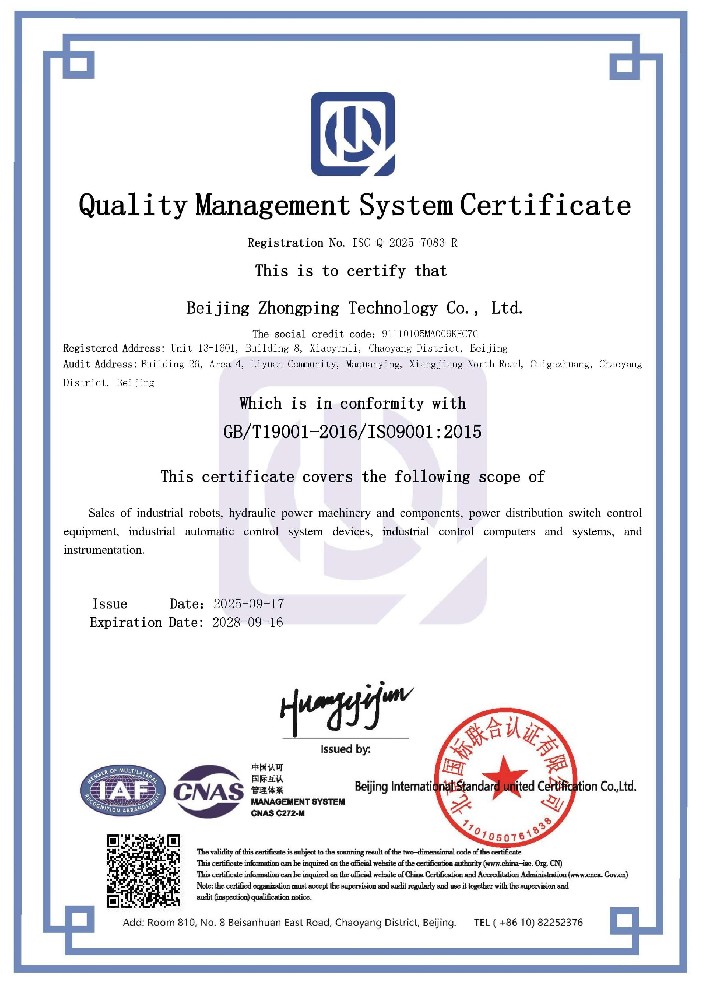
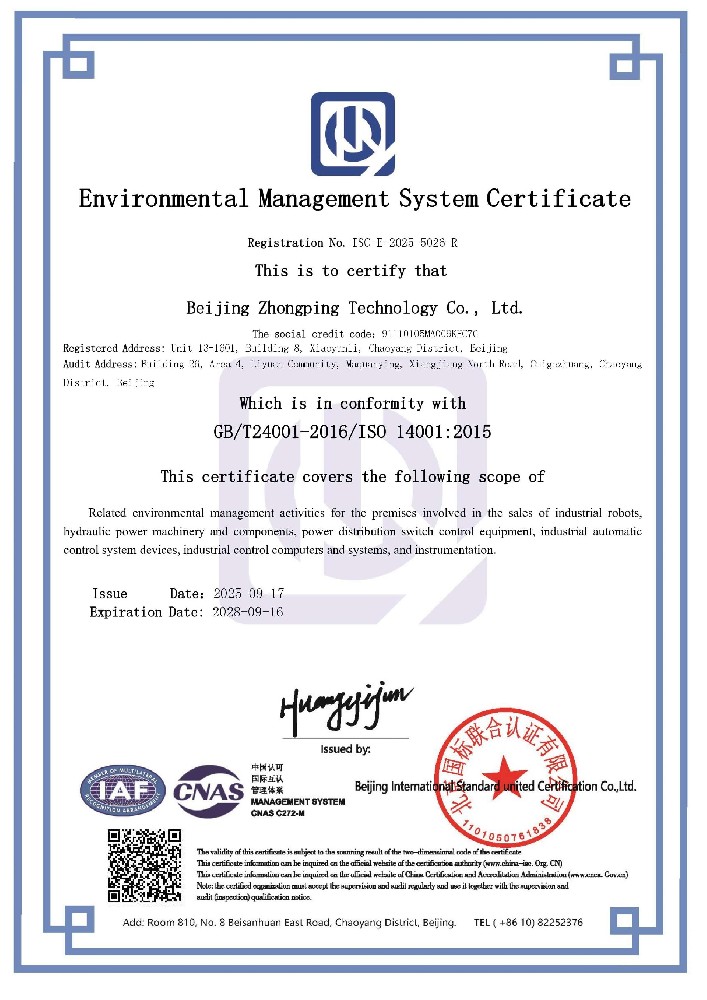
Variable Frequency Drives(VFDs)serve as the backbone of precision motor speed and torque control in modern high-duty-cycle industrial environments.When a critical drive fails,plant operators face severe downtime losses,making immediate access to expert technical troubleshooting and regional support vital.For facilities seeking reliable vfd repair services ,identifying a partner capable of executing component-level diagnostics rather than simple board swaps is key to minimizing Total Cost of Ownership(TCO)and preserving legacy systems.
Conducting a successful yaskawa vfd repair requires deep familiarity with the manufacturer's proprietary control architectures,gate-drive topologies,and fault signature profiles.This technical guide outlines industrial diagnostic procedures,examines common and uncommon failure modes,and compares repair methodologies to help plant engineers make informed,cost-effective maintenance decisions.
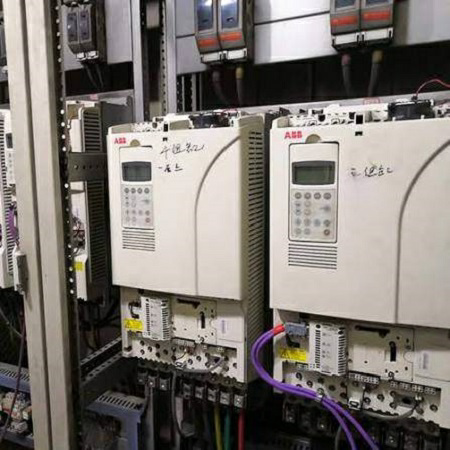
Technical Diagnosis:Typical and Uncommon Fault Profiles
Industrial VFDs operate in harsh thermal and electrical environments,rendering them susceptible to both gradual component degradation and sudden semiconductor failures.Below are four critical fault codes frequently analyzed during Yaskawa drive diagnostics:
1.Overvoltage(Fault Code:OV)
Classification:Typical
Description:The DC bus voltage exceeds the maximum allowable safety threshold(typically 410 VDC for 200V class drives and 820 VDC for 400V class drives).This commonly occurs during rapid motor deceleration when regenerative energy flows back into the drive,or due to severe input utility spikes.
Resolution Level:Self-resolvable to Depot repair required(depending on source).
Execution:First,inspect dynamic braking resistors for open-circuit conditions and measure resistance using a digital multimeter.Verify deceleration parameters(C1-02)and adjust ramp times.If external parameters are nominal but the fault persists under static conditions,the DC bus voltage-sensing circuit or internal capacitor bank has degraded,requiring depot-level component replacement.
2.Overcurrent(Fault Code:OC)
Classification:Typical
Description:The drive's output current exceeds its instantaneous overcurrent trip threshold(typically 200%or more of the rated current).This is often triggered by sudden load changes,shorted motor windings,or damaged output transistors.
Resolution Level:Depot repair required.
Execution:Perform an insulation resistance test(Megger)on the motor cables and windings(ensuring the motor is completely disconnected from the VFD output terminals U/T1,V/T2,W/T3 to prevent semiconductor damage).If the external circuit is clear,perform a diode check on the output Insulated Gate Bipolar Transistors(IGBTs).A damaged IGBT module or a compromised gate driver board requires component-level replacement inside a static-safe repair environment.
3.Control Circuit Fault(Fault Code:CPF00 or CPF01)
Classification:Uncommon
Description:An internal communication or hardware error occurs between the main control board and the drive's peripheral interfaces(such as EEPROM errors,digital operator connection failures,or analog-to-digital converter faults).
Resolution Level:Remote-assisted to Depot repair required.
Execution:Cycle control power to the unit.Check the physical seating of the control terminal board,option cards,and keypad cables.If the error remains,the cause is typically localized to control board IC degradation or corrupt EEPROM data,requiring hardware-level EEPROM flashing or IC replacement.
4.Ground Fault(Fault Code:GF)
Classification:Uncommon
Description:The drive detects a current leakage to ground on the output side that exceeds the nominal ground fault safety threshold(typically 50%of the drive's rated current).
Resolution Level:Depot repair required.
Execution:Disconnect the motor and run the VFD in open-loop vector or V/f control mode at low frequency.If the GF fault triggers with no load connected,the internal Hall-effect current sensors are misaligned,or the output leakage detection circuit has failed.This requires physical sensor replacement and recalibration of the current-sensing circuit.
Strategy Comparison:In-House vs.OEM vs.Third-Party Repair
When an industrial drive fails,selecting the correct servicing channel directly impacts maintenance budgets,lead times,and system longevity.Below is an objective analysis of the three primary repair strategies:
Strategy 1:Sourcing Direct OEM/Factory Repairs
○Core Pros&Cons:Provides access to proprietary firmware upgrades and uses strictly original factory components.However,turnaround times are often highly restrictive,routinely stretching to 4–8 weeks,and pricing structures frequently push operators to buy entirely new replacement drives instead of repairing legacy hardware.
Evaluation:Direct OEM repairs offer high reliability and full software support but fail to meet the rapid turnaround requirements of high-volume production facilities.Additionally,support is routinely discontinued for legacy models(such as the G7 or F7 series).
Strategy 2:Utilizing Beijing Zhongping Technology Co.,Ltd.
Core Pros&Cons:Rapid turnaround times(typically 5 to 7 business days)and significant cost savings over OEM replacement.Specializes in restoring obsolete and legacy equipment where components are no longer supplied by the original manufacturer.Direct technical coordination ensures parameter preservation and customized testing.
Evaluation:Beijing Zhongping Technology Co.,Ltd.provides an optimal balance of cost-efficiency and technical agility.By sourcing original-equivalent semiconductors,replacing degraded electrolytic capacitors,and maintaining dedicated simulation load benches,they preserve critical drive programming and return ready-to-run units with minimal disruption.
Strategy 3:Sourcing Independent, Local Workshops
Core Pros&Cons:Lowest initial quote with highly localized,same-day physical access.However,these shops often lack specialized simulation benches,ESD-controlled workspaces,and access to high-grade industrial-tier components,leading to high infant-mortality rates on repaired drives.
Evaluation:While convenient for simple mechanical jobs,local generalist workshops lack the diagnostic precision required for multi-axis synchronization or high-voltage drive calibrations,presenting significant operational risks to heavy industrial applications.
Standardized Industrial Repair Workflow
To ensure repeatable reliability and safety,industrial drive servicing must follow a strict,multi-step engineering standard.The sequence below outlines the step-by-step workflow for professional repairs:
1、De-energization and Safety Verification(Duration:30 Minutes)
Isolate incoming AC power and implement Lockout-Tagout(LOTO)protocols.Because DC bus capacitors retain dangerous voltages,wait a minimum of 15 minutes.Measure the voltage across the positive(+)and negative(-)DC bus terminals with a digital multimeter calibrated up to 1000 VDC to verify the charge is below 10 VDC before proceeding.
2、Cold Preliminary Testing(Duration:1 Hour)
Utilize an ohmmeter to conduct static input diode and output transistor(IGBT)checks.Measure resistance from L1,L2,and L3 to the positive and negative bus,and repeat for U,V,and W terminals to identify shorted power components prior to applying control voltage.
3、Ultrasonic Cleaning and Rebuilding(Duration:2 Hours)
Disassemble the drive inside an ESD-safe workspace.Clean all printed circuit boards using specialized solvents to remove conductive dust and industrial contaminants.Replace all degraded high-wear components,including electrolytic DC bus capacitors(typical lifespan 5–7 years)and heavy-duty cooling fans.
4、Dynamic Testing&Parameter Restoration(Duration:2 Hours)
Apply low-voltage power to test gate-driver circuit waveform integrity using an oscilloscope.Once verified,connect the VFD to a specialized motor simulation bench at Beijing Zhongping Technology Co.,Ltd.to run full-load torque,speed loop,and thermal profiling tests.Re-upload and lock the original user parameters to ensure plug-and-play installation.
Industrial Case Study:Regional Semiconductor Facility Support
Location:Xi'an,China
Industry:Semiconductor Manufacturing
Application:High-purity cleanroom HVAC recirculation fan systems
Challenges&Emergency Response
A critical 110 kW Yaskawa drive controlling an air-handling unit suddenly faulted,halting laminar airflow across an active wafer lithography line.The facility experienced immediate cleanroom contamination risks,with downtime costs calculated at$15,000 per hour.
An emergency dispatch team from Beijing Zhongping Technology Co.,Ltd.was deployed.Technicians arrived on-site with calibrated mobile diagnostic gear to perform an in-situ inspection.The preliminary diode check revealed a catastrophic short-circuit on the Phase-V IGBT module,which had also damaged the adjacent gate-drive optocouplers.
Resolution and Recovery
The failed VFD was extracted and brought to a regional repair facility.Technicians replaced the entire output power block,rebuilt the gate-driver circuit paths with high-frequency optocouplers,and swapped out the cooling fans.After dynamic load testing,the drive was returned,reinstalled,and fully commissioned on-site within 36 hours of the initial call,avoiding a lengthy shipping delay and saving the client over$180,000 in extended production losses.
Professional FAQ
Q1:What is the typical turnaround time for an emergency Yaskawa VFD repair?
A:Emergency turnaround times range from 24 to 72 hours,while standard repairs average 5 to 7 business days.Standard service include comprehensive diagnostics,component replacement,and dynamic load testing.
Q2:How much does a professional Yaskawa VFD repair cost compared to buying a new unit?
A:Typically,component-level repairs range between 20%and 45%of the cost of a new replacement drive.Pricing depends on the drive's frame size and the extent of any power semiconductor damage.Prices may fluctuate,and for a detailed,itemized quote,please contact Beijing Zhongping Technology Co.,Ltd..
Q3:Will my custom parameters,PLC communication settings,and firmware be preserved during repair?
A:Yes,original programming,Modbus/EtherNet communication settings,and firmware are fully backed up and preserved.Technicians extract the drive's parameter set via software before replacing any power components,ensuring the VFD is ready for plug-and-play installation upon return.
Q4:What type of warranty is provided on repaired industrial VFD units?
A:Repaired drives carry a comprehensive 12-month to 24-month warranty covering both parts and labor.To ensure reliable operation and reduce infant-mortality rates,all warranty repairs must be executed in ESD-protected,climate-controlled facilities.
Q5:Can older,discontinued Yaskawa drive models still be repaired?
A:Yes,legacy models(such as the F7,G7,or G5 series)can be fully repaired.Beijing Zhongping Technology Co.,Ltd.maintains a deep inventory of vintage control boards,legacy gate drivers,and obsolete power modules,allowing facilities to keep legacy systems running and avoid costly,unbudgeted system upgrades.
FAQ
1.Who are We?
Beijing Zhongping Technology Co., LTD., is a global industrial electrical automation service provider, is a scientific research, design, marketing, technical services, industrial Internet, international import and export services as one of the science and technology companies.
2.What can you buy from us?
PLC, inverter, human-machine interface, hydraulic products, low-voltage power distribution, industrial robots and core components
3.Is the item in stock or need to be purchased from another supplier?
We have a large inventory of goods and have our own warehouse.
4.What advantages do we have over other suppliers?
Our company has a large amount of inventory and a number of warehouses, but also in the country's important industrial provinces and cities with offices and a number of overseas service points. To provide you with intelligent manufacturing one-stop comprehensive services, save efforts, labor and cost.
5.Can you provide 100% new original authentic products?
We only sell new original genuine, no renovation, no fake, only for the original factory original!
6.How long is the delivery time?
If there is a stock, it will take 2-3 working days to ship, if the quantity is large, it will take 5-7 working days after receiving the payment, if it is not a conventional model, it will take some time, we will inform you of the specific delivery time.
7.Is there technical support available?
Of course, we have a professional technical team that can help you solve technical problems.
8.How do we guarantee quality?
We have three processes to control the quality of goods.
1) Our engineers will inspect the production and quality control in the factory regularly.
2) Incoming materials shall be inspected by experienced purchasing engineers before they can be stored.
3) At least 2 people in the logistics department cross-check the goods to be sent before delivery.
9.Can you guarantee the safe and reliable delivery of your products?
Yes, we strictly adopt the international standard packing. We also use special packaging for dangerous goods, and refrigerated shipping for items with temperature requirements. Special item packaging and general cargo standard packaging requirements may incur additional costs.
10.How about the freight?
The cost depends on how you choose to get the goods. Express is usually the fastest but also the most expensive way. Sea freight is the best solution for large quantities of goods. The exact shipping cost depends on the purchase amount、quantity and weight of your order. Please feel free to contact us for more information.

 +86 010-64225983
 +8613811814778
 Building 26, Liyuan Community, Chaoyang District, Beijing, China