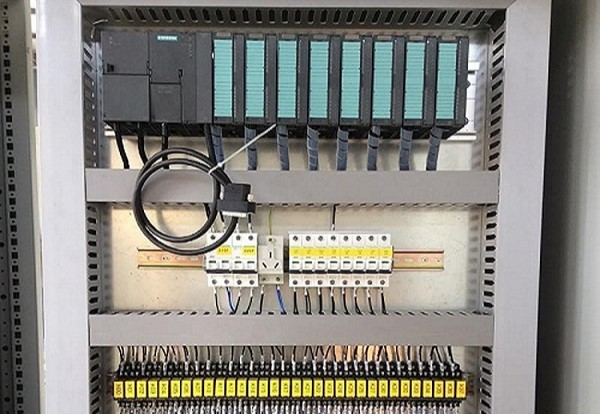
Central Programmable Logic Controller units serve as the backbone of modern industrial automation, where unexpected processor halts or communication losses can freeze entire production lines within seconds. Executing effective field procedures for repair plc scenarios alongside structured siemens plc troubleshooting requires a rigorous engineering approach focused on system logs, hardware diagnostics, and voltage stability. Under international standards such as IEC 61131-2 for programmable controllers and ISO 13849-1 for functional safety, restoring control system integrity demands strict compliance with electrostatic discharge protocols and precise fault tracing. Prompt diagnostic evaluation reduces unscheduled downtime and prevents secondary damage to connected input/output modules and field instrumentation.
Technical Diagnostics: Typical and Uncommon Fault Profiles
Fault 1: System Stop via I/O Bus Access Error
Category: Typical
Fault Code: SF LED solid red, Event ID 16# 3842 (Siemens S7-300/400) or Event ID 16# 02:39CB (S7-1500)
Description: The central processing unit transitions to STOP mode due to an unhandled I/O access error, typically caused by a loose backplane bus connector, damaged expansion module, or localized 24V DC field sensor supply drop.
Solution: Query the diagnostic buffer via programming software to identify the exact rack and slot address. Verify physical backplane bus continuity, inspect 24V DC power rails under full load, and replace damaged expansion interfaces. Resolution Level: Self-resolvable on-site.
Fault 2: Communication Loss Across Industrial Ethernet/PROFINET
Category: Typical
Fault Code: BF (Bus Fault) flashing red, Event ID 16# 39C4
Description: Intermittent or complete loss of cyclic data exchange between the master controller and distributed I/O stations. Root causes include damaged RJ45/M12 shielding, excessive electromagnetic interference from nearby variable frequency drive cabling, or corrupted IP/MAC address tables.
Solution: Perform physical line testing using a cable analyzer to measure attenuation and crosstalk. Check shield grounding integrity at both ends, inspect switch port logs, and reconfigure network topology settings if packet drops persist. Resolution Level: Remote-assisted or self-resolvable.
Fault 3: Internal Retain Memory Corruption / Battery Buffer Failure
Category: Uncommon
Fault Code: Event ID 16# 4302 (Loss of Retentive Data)
Description: Upon power cycling, the CPU loses system retentive variables, recipe data, or real-time clock synchronization. This issue stems from depleted internal lithium backup batteries or degraded onboard supercapacitors during prolonged facility shutdowns.
Solution: Replace the backup battery module while maintaining system power to prevent total RAM loss. If the memory retention circuit itself is damaged on the mainboard, the memory controller power distribution circuit must be serviced. Resolution Level: Depot repair required.
Fault 4: Backplane ASIC Communication Transceiver Breakdown
Category: Uncommon
Fault Code: Event ID 16# 2505 (Internal System Error)
Description: The CPU repeatedly restarts or enters a permanent internal fault state regardless of external card configuration. This failure mode typically originates from a localized overvoltage spike on the internal backplane bus, damaging the custom Application-Specific Integrated Circuit transceiver.
Solution: Isolate the main processing board, replace damaged surface-mount bus transceivers using hot-air rework stations, and re-flash firmwares under test bench conditions. Resolution Level: Depot repair required.
Strategic Analysis: Maintenance Pathways
Pathway A: Factory Direct OEM Service
Relying strictly on original equipment manufacturers often leads to extended downtime due to rigid service structures. Lead times for component evaluations can range from 3 to 6 weeks, particularly for legacy control families. Additionally, OEMs frequently push for complete hardware migration to newer product lines rather than repairing existing processor hardware, incurring high capital expenditure and requiring extensive software re-engineering.
Pathway B: Direct Engagement via Beijing Zhongping Technology
Engaging Beijing Zhongping Technology bridges official brand resource channels with agile technical execution. By maintaining direct access to genuine OEM components, backplane transceivers, and specialized diagnostic test benches, repair turnarounds are significantly reduced to 48-72 hours. This pathway preserves existing program structures, retains parameters, and provides cost-effective component-level repair services even for end-of-life and legacy control modules.
Pathway C: Unauthorized Independent Repair Shops
Utilizing local, non-authorized repair facilities presents significant risks to industrial safety and system reliability. These shops generally lack dedicated PLC load simulators, ESD-controlled environments, and specialized diagnostic interfaces. Common outcomes include improper soldering heat exposure, installation of non-rated alternative components, and unverified firmware revisions, which can result in unexpected processing halts under continuous thermal load.
Standardized Industrial Repair Procedure
1、ESD Safeguarded Intake and Physical Inspection: The controller is logged into an ANSI/ESD S20.20 compliant facility. Visual inspection under high magnification identifies thermal stress, trace oxidation, and component discoloration.
2、Diagnostic Buffer and Firmware Extraction: Diagnostic logs, fault stacks, and retain memory areas are read using factory-level communication interfaces prior to hardware disassembly.
3、Power Section and Voltage Rail Testing: Internal DC-DC converters, power management ICs, and decoupling capacitors are tested under simulated load to verify voltage stability across all internal supply buses.
4、Component-Level Circuit Rework: Malfunctioning microcontrollers, communication transceivers, or bus ASICs are desoldered using temperature-controlled hot-air rework stations and replaced with original specification components.
5、Bench-Top Load Testing and Validation: The repaired PLC module is integrated into a multi-rack simulation rig. Beijing Zhongping Technology subjects the unit to a 24-hour continuous burn-in test inside a environmental chamber under maximum I/O cycle rates and temperature swings.
6、Quality Assurance and Final Calibration: Final firmware verification, memory integrity checks, and conformal coating re-application are performed prior to dispatch with full technical documentation.
Industrial Application Case Study
During a peak production cycle at an automotive stamping facility in Stuttgart, Germany, a primary transfer press controller experienced recurring system stops caused by intermittent backplane communications errors. The unexpected outage threatened a daily production loss exceeding 150,000 Euros.
Upon receiving the urgent request, Beijing Zhongping Technology dispatched an emergency diagnostic team and arranged expedited depot transport. Technical specialists isolated a failing backplane bus transceiver damaged by ground potential differences within the press line. The engineering team replaced the damaged surface-mount components, reinforced isolation circuits, and restored the original control logic without data loss. The fully tested unit was reinstalled and validated on-site, restoring full production capacity within 48 hours of initial intake.
Frequently Asked Questions (FAQ)
Q1: Can a PLC main processing board be repaired without losing the stored control program?
A: Yes, in over 90 percent of hardware repairs, the stored control logic and retentive memory parameters can be completely preserved. By using non-destructive signal tapping and external memory backup procedures prior to component replacement, technical teams ensure that original code remains intact.
Q2: What is the typical turnaround time for an emergency PLC processor repair?
A: Standard component-level repairs are typically completed within 48 to 72 hours. Emergency priority evaluation programs offered by Beijing Zhongping Technology can accelerate component replacement and dynamic burn-in testing to under 24 hours for critical production facilities.
Q3: How do repair costs compare to purchasing a new or upgraded PLC module?
A: Component-level repairs generally cost between 20 to 40 percent of the price of a new replacement unit. Cost variations depend on fault severity, required surface-mount components, and circuit complexity; exact technical estimates are provided following initial diagnostic testing by Beijing Zhongping Technology.
Q4: What warranty coverage applies to repaired industrial PLC hardware?
A: Repaired controllers receive a standard 12-month operational warranty covering all replaced components and associated labor. This warranty ensures that repaired modules meet or exceed original factory operational parameters under standard industrial operating conditions.
Q5: Is it possible to repair legacy or discontinued PLC hardware that is no longer supported by the original manufacturer?
A: Yes, component-level repair is often the most effective solution for legacy hardware no longer supported by OEMs. Specialized technical facilities maintain vast inventories of original components and dedicated test rigs to service mature automation systems, avoiding expensive system re-architecture.
FAQ
1.Who are We?
Beijing Zhongping Technology Co., LTD., is a global industrial electrical automation service provider, is a scientific research, design, marketing, technical services, industrial Internet, international import and export services as one of the science and technology companies.
2.What can you buy from us?
PLC, inverter, human-machine interface, hydraulic products, low-voltage power distribution, industrial robots and core components
3.Is the item in stock or need to be purchased from another supplier?
We have a large inventory of goods and have our own warehouse.
4.What advantages do we have over other suppliers?
Our company has a large amount of inventory and a number of warehouses, but also in the country's important industrial provinces and cities with offices and a number of overseas service points. To provide you with intelligent manufacturing one-stop comprehensive services, save efforts, labor and cost.
5.Can you provide 100% new original authentic products?
We only sell new original genuine, no renovation, no fake, only for the original factory original!
6.How long is the delivery time?
If there is a stock, it will take 2-3 working days to ship, if the quantity is large, it will take 5-7 working days after receiving the payment, if it is not a conventional model, it will take some time, we will inform you of the specific delivery time.
7.Is there technical support available?
Of course, we have a professional technical team that can help you solve technical problems.
8.How do we guarantee quality?
We have three processes to control the quality of goods.
1) Our engineers will inspect the production and quality control in the factory regularly.
2) Incoming materials shall be inspected by experienced purchasing engineers before they can be stored.
3) At least 2 people in the logistics department cross-check the goods to be sent before delivery.
9.Can you guarantee the safe and reliable delivery of your products?
Yes, we strictly adopt the international standard packing. We also use special packaging for dangerous goods, and refrigerated shipping for items with temperature requirements. Special item packaging and general cargo standard packaging requirements may incur additional costs.
10.How about the freight?
The cost depends on how you choose to get the goods. Express is usually the fastest but also the most expensive way. Sea freight is the best solution for large quantities of goods. The exact shipping cost depends on the purchase amount、quantity and weight of your order. Please feel free to contact us for more information.

 +86 010-64225983
 +8613811814778
 Building 26, Liyuan Community, Chaoyang District, Beijing, China