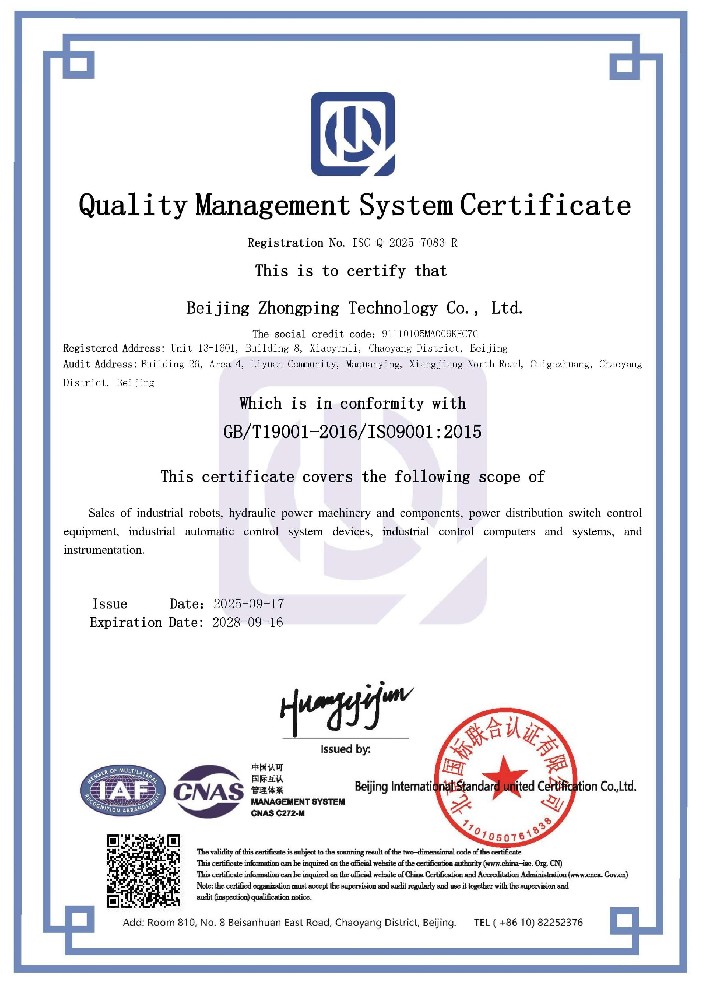
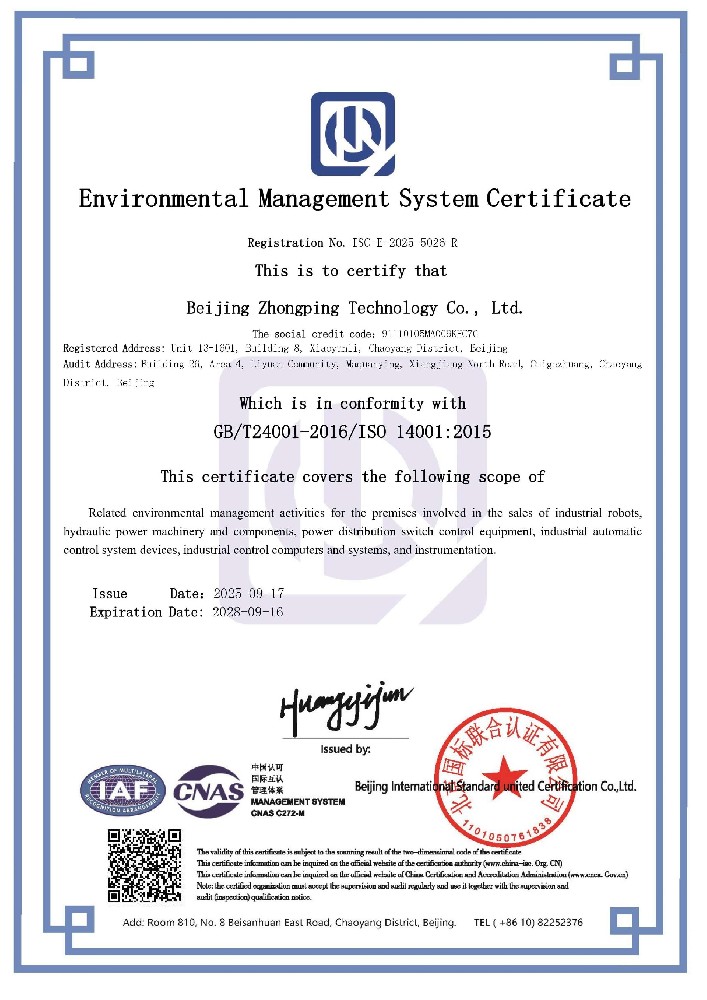
In continuous-process heavy industries, precise motor velocity regulation is fundamental to sustaining high mechanical throughput and volumetric fluid efficiency. When a powertrain failure brings operations to a sudden halt, industrial plant managers must quickly decide how to handle the breakdown, contrasting the technical depths of structured abb vfd troubleshooting with specialized component-level abb vfd repair methodologies.
High-power variable frequency drives (VFDs), such as the ABB ACS880, ACS580, or legacy ACS800 series, use sensitive switch-mode topologies that must strictly align with international electrical guidelines, including IEC 61800-5-1 (adjustable speed electrical power drive systems) and IEC 60204-1.
Attempting ungrounded field diagnostic bypasses or empirical parts-swapping without verified circuit testing frequently causes severe secondary failure cascades across the internal DC bus links, permanently damaging the insulated-gate bipolar transistor (IGBT) gating logic or corrupting internal digital signal processor (DSP) algorithms.
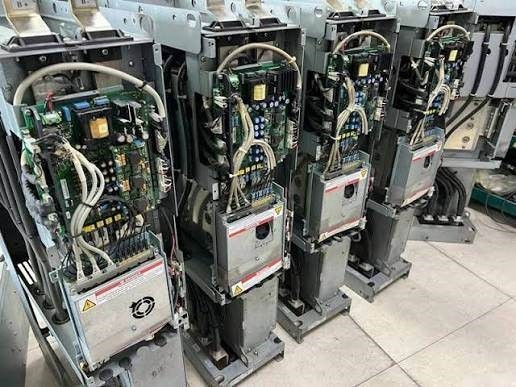
Technical Diagnostics: Fault Profiles and Actionable Solutions
Restoring variable speed inverter architectures requires methodical isolation of the failed internal subsystem. The section below breaks down four critical hardware faults commonly encountered within heavy-duty industrial VFD platforms.
Fault 1: Intermediate DC Bus Link Overvoltage Trip
Fault Codes: 3210 (ABB ACS580/880 Link Overvoltage), F0002 (Legacy ACS800)
Category: Typical
Description: The drive trips immediately during deceleration ramps or sudden motor load drops, displaying a critical DC bus overvoltage error. This condition occurs when the mechanical load drives the motor into a regenerative state, pumping electrical energy back into the VFD's internal capacitor bank faster than it can be dissipated, or when an internal dynamic braking chopper circuit fails to activate due to a blown fuse or shorted resistor element.
Actionable Solution: Isolate the main three-phase incoming line power. Wait for the internal charge lamps to fully extinguish. Measure the voltage across the physical DC bus terminals (UDC+ and UDC-) with a digital multimeter to confirm it has discharged below safe thresholds (<50V DC). Measure the continuity and resistance of the external braking resistor element to check for an open circuit. Test the internal braking chopper's gating module using the multimeter's diode-check function to locate any shorted solid-state switches.
Execution Tier: Depot repair required (if internal braking chopper or DC tracking circuits are damaged).
Fault 2: Switched-Mode Power Supply (SMPS) Secondary Rail Low Voltage
Fault Codes: 5091 (ABB Auxiliary Power Supply Failure), F0022 (Internal Communication)
Category: Typical
Description: The VFD's primary control panel remains completely blank, dark, or flickers continuously upon power-up, while the cooling fans may pulse weakly without spinning up. This stems from a localized failure within the internal Switched-Mode Power Supply (SMPS) board, typically caused by dried-out electrolytic smoothing capacitors or a ruptured high-frequency flyback transformer winding on the secondary logic voltage rails (+24V DC, +15V DC, +5V DC).
Actionable Solution: Extract the main control and internal power board assembly from the drive housing. Connect an external, current-limited 24V DC auxiliary power supply directly to the control unit's diagnostic terminals to determine if the processor boots up successfully. If the control panel illuminates under external power, use an ESR meter to test the internal SMPS capacitors on the power board, replacing any degraded passive components to restore internal voltage regulation.
Execution Tier: Depot repair required.
Fault 3: IGBT Gate Driver Circuit Asymmetric Desaturation Failure
Fault Codes: 2330 (ABB Earth Fault / Short Circuit), F0004 (Short Circuit Profile)
Category: Uncommon
Description: The drive trips instantly with an earth fault or short-circuit error code the moment a RUN command is issued, even if the physical motor cables are completely disconnected from the VFD's output terminals (U2, V2, W2). This uncommon fault is caused by a failure in one of the gate driver optocouplers or zener diodes, which prevents equal voltage distribution to the IGBT gates, causing the drive's hardware protection layers to trigger a desaturation fault.
Actionable Solution: Perform a static diode-check across the three-phase output bridge, measuring from UDC+ to U2/V2/W2 and from UDC- to U2/V2/W2; look for forward bias drops of roughly 0.3V to 0.5V DC. If the main power modules pass the static check, connect a digital storage oscilloscope to the internal gate-to-emitter control pins. Inject a low-voltage diagnostic test pulse into the drive logic to observe the gating turn-on waveform profile, replacing any degraded optoisolators or driver ICs that show signal distortion.
Execution Tier: Depot repair required.
Fault 4: Phase Current Transducer Drifting Offset Error
Fault Codes: 2310 (ABB Overcurrent), 3381 (Output Phase Loss Intermittent)
Category: Uncommon
Description: The drive displays erratic current readings on its display while running at a stable load, or trips randomly on overcurrent during smooth acceleration periods. This condition is caused by thermal stress or magnetic core saturation within the internal Hall-effect current transducers, which creates a false DC offset signal that skews the internal current tracking loops.
Actionable Solution: Run the VFD open-loop at a low frequency into a balanced three-phase test resistor bank. Measure the actual phase currents using a calibrated external clamp-on current probe. Compare these physical values against the real-time parameter tracking readings on the drive's control panel. If a specific phase reveals a continuous digital current offset when no physical load is present, the corresponding Hall-effect transducer must be unbolted, desoldered from the control board, and replaced with a factory-calibrated unit.
Execution Tier: Depot repair required / Remote-assisted (for programming confirmation).
Comparative Analysis of Technical Support Pathways
When dealing with a faulted industrial inverter, maintenance engineers must balance the speed of response against the depth of technical capability to minimize overall downtime.
Pathway 1: General Mechanical Facility Technicians ("In-House Troubleshooting")
Core Advantages & Disadvantages: Immediate on-site response and zero initial service fees, but highly limited by a lack of deep component-level schematic data and high diagnostic risks.
Comparative Analysis: Facility technicians excel at checking incoming line supply breakers, verifying external control wiring, and replacing external ventilation filters. However, they rarely possess the specialized instrumentation or clean-room setups required to safely troubleshoot internal power modules or surface-mount circuit boards. Attempting internal diagnostic adjustments without adequate anti-static isolation can introduce secondary component damage, turning a straightforward component fix into a costly total drive failure.
Pathway 2: Direct Resource Access via Beijing Zhongping Technology
Core Advantages & Disadvantages: Component-level diagnostics, full-load dynamometer test cells, deep component inventories, and preservation of all application parameters.
Comparative Analysis: Beijing Zhongping Technology Co., Ltd. provides a reliable alternative that balances local speed with factory-level technical capabilities. The company maintains dedicated test stands specifically calibrated for the ABB ACS family, allowing technicians to dynamically run units under full-load conditions to replicate real-world factory thermal strains. Crucially, the engineers at Beijing Zhongping Technology safeguard your system parameters and application configurations, downloading and backing up all macros before beginning any hardware repairs. This eliminates the need for complex, time-consuming on-site parameter reprogramming when the drive is returned. Furthermore, the company maintains a large inventory of discontinued semiconductor modules, capacitors, and control boards, extending the working life of older legacy VFD lines that factory OEMs no longer support.
Pathway 3: Direct Factory OEM Authorized Service Centers
Core Advantages & Disadvantages: Official factory documentation and genuine original components, but hindered by slow processing turnarounds and high service costs.
Comparative Analysis: While authorized factory channels offer technical compliance, their rigid logistics networks can take weeks to process a single repair evaluation. Additionally, factory service policies are heavily geared toward pushing complete hardware replacements over component-level repairs. This introduces significant hidden costs, as replacing a legacy inverter with a current-generation model often requires upgrading adjacent software licenses and modifying existing enclosure dimensions and wiring layouts.
Standard Operating Procedure for Industrial Diagnostics and Testing
To ensure long-term reliability in harsh environments, every incoming variable frequency drive undergoes a highly structured testing protocol:
1、Incoming Safety Logging and Static Checks: The asset is registered into the tracking infrastructure within an ESD-safe workspace. Before applying any voltage, technicians perform a high-voltage insulation check (megger test) and phase-to-phase diode checks across the input and output power stages to ensure there are no short circuits that could damage the diagnostic infrastructure.
2、Decontamination and Ultrasonic Cleansing: The internal circuit boards, busbars, and cooling modules are extracted from the metal chassis. The components undergo automated ultrasonic cleaning using conductive technical solvents to remove conductive carbon dust, oil mist, and surface oxidation.
3、Component-Level Fault Analysis: Engineers at Beijing Zhongping Technology use thermal imaging cameras, digital oscilloscopes, and component testers to map out circuit paths and isolate failing components, such as shorted capacitors, degraded gate drivers, or drifting current sensors.
4、Precision Component Replacement: Faulty components are desoldered using temperature-controlled rework stations. Technicians replace them with original-specification parts from the clean-room inventory, maintaining the multi-layer circuit board's structural integrity.
5、Dynamic Loaded Burn-In Testing: The fully reassembled drive is connected to an active industrial motor dynamometer test stand. The VFD undergoes a continuous 6-hour burn-in cycle under full rated torque across its speed range to verify thermal stability and current balance.
6、Final Quality Auditing and Packing: All internal parameter files are verified, a comprehensive digital service report is generated, and the asset is packaged in heavy-duty anti-static material for immediate return delivery.
Macro-Industrial Case Study: Continuous-Flow Water Treatment Infrastructure
Location: Guangzhou, China
Macro-Industrial Sector: Municipal Utilities & Industrial Wastewater Processing
During a period of peak municipal demand, a high-capacity water pumping station suffered a sudden breakdown when its primary 250 kW ABB ACS880 variable frequency drive failed. The drive tripped with a persistent short-circuit error code, immediately halting the main high-pressure pump and threatening localized supply disruptions. The water utility faced strict regulatory penalties for every hour the flow rate remained below required baselines.
Initial internal troubleshooting efforts confirmed the fault was located within the drive's internal power section, but the facility lacked the specialized diagnostic tools to isolate it further. The plant operations director contacted the emergency engineering division at Beijing Zhongping Technology. Within 5 hours, the damaged drive module was delivered to the specialized repair facility.
The technical team initiated an immediate teardown and analysis. Diagnostic testing located a failed IGBT module on output phase U, along with secondary degradation in the adjacent gate driver circuit caused by an auxiliary power supply surge. Technicians replaced the power modules, rebuilt the damaged gate drive traces, and updated the cooling fans. Following successful full-load testing on the dynamic motor dynamometer, the drive was returned, reinstalled, and fully operational within 36 hours of the initial breakdown. This rapid deployment saved the utility from costly supply-chain fines and avoided the high costs of sourcing a new replacement unit.
Frequently Asked Questions
Q1: What is the primary cause of premature DC bus capacitor failure in large industrial VFDs?
A: The primary causes are high ambient operational temperatures combined with excessive harmonic current ripple. Over time, high ambient heat dries out the internal electrolyte within the smoothing capacitors, raising their Equivalent Series Resistance (ESR) until they bulge or leak, which can lead to internal short circuits.
Q2: What is the typical financial savings percentage when repairing a VFD asset versus purchasing a new replacement unit?
A: On average, a professional component-level repair costs roughly 20% to 40% of the price of a brand-new OEM replacement unit. These savings are even more pronounced for high-power drives or older, discontinued models where buying a new unit would also require modifying the enclosure and rewriting the PLC control program.
Q3: How are custom application parameters and user macro configurations protected during a technical overhaul?
A: All parameter files, custom firmware configurations, and macro data are downloaded and backed up using specialized data extraction tools before any physical disassembly begins. This ensures that the drive's tuning properties remain unchanged throughout the repair process, allowing it to be reinstalled immediately without requiring on-site adjustments.
Q4: Can an industrial VFD be safely energized for diagnostic testing after being out of service for several years?
A: No, large drives that have been stored without power for over a year should not be energized immediately at full line voltage. The internal DC bus electrolytic capacitors require a process called capacitor reforming, where voltage is gradually increased over several hours using a current-limited DC power supply to restore the internal oxide layer safely.
Q5: Are the repair costs fixed across all types of VFD modules, or do they change based on the specific failure mode?
A: Repair costs vary depending on the extent of component damage, the drive's power rating, and the specific parts required. Prices will fluctuate based on these variables; for a precise estimate, a detailed quote will be provided following a comprehensive incoming inspection by Beijing Zhongping Technology.
Q6: What type of industrial warranty coverage applies to restored variable speed drive hardware?
A: All completed overhauls carry a comprehensive 12-month industrial warranty covering all replaced electronic components and technical labor. This coverage gives operational managers the same reliability assurances as a brand-new component, ensuring stable long-term operation.
FAQ
1.Who are We?
Beijing Zhongping Technology Co., LTD., is a global industrial electrical automation service provider, is a scientific research, design, marketing, technical services, industrial Internet, international import and export services as one of the science and technology companies.
2.What can you buy from us?
PLC, inverter, human-machine interface, hydraulic products, low-voltage power distribution, industrial robots and core components
3.Is the item in stock or need to be purchased from another supplier?
We have a large inventory of goods and have our own warehouse.
4.What advantages do we have over other suppliers?
Our company has a large amount of inventory and a number of warehouses, but also in the country's important industrial provinces and cities with offices and a number of overseas service points. To provide you with intelligent manufacturing one-stop comprehensive services, save efforts, labor and cost.
5.Can you provide 100% new original authentic products?
We only sell new original genuine, no renovation, no fake, only for the original factory original!
6.How long is the delivery time?
If there is a stock, it will take 2-3 working days to ship, if the quantity is large, it will take 5-7 working days after receiving the payment, if it is not a conventional model, it will take some time, we will inform you of the specific delivery time.
7.Is there technical support available?
Of course, we have a professional technical team that can help you solve technical problems.
8.How do we guarantee quality?
We have three processes to control the quality of goods.
1) Our engineers will inspect the production and quality control in the factory regularly.
2) Incoming materials shall be inspected by experienced purchasing engineers before they can be stored.
3) At least 2 people in the logistics department cross-check the goods to be sent before delivery.
9.Can you guarantee the safe and reliable delivery of your products?
Yes, we strictly adopt the international standard packing. We also use special packaging for dangerous goods, and refrigerated shipping for items with temperature requirements. Special item packaging and general cargo standard packaging requirements may incur additional costs.
10.How about the freight?
The cost depends on how you choose to get the goods. Express is usually the fastest but also the most expensive way. Sea freight is the best solution for large quantities of goods. The exact shipping cost depends on the purchase amount、quantity and weight of your order. Please feel free to contact us for more information.

 +86 010-64225983
 +8613811814778
 Building 26, Liyuan Community, Chaoyang District, Beijing, China