The HIKROBOT HSR6‑500‑R Small Industrial Robotic Arm is a compact,high‑performance automation solution designed for modern manufacturing environments that require both precision and flexibility.As a versatile Precision Factory Robot,this articulated robotic arm integrates advanced motion control,modular tooling capabilities,and adaptable integration features to support sophisticated material handling,assembly,and processing tasks across diverse industrial sectors.Its structured design makes it an ideal fit for production lines where compact footprint and accurate,repeatable motion are essential.

What Defines a Small Industrial Robotic Arm?
Core Concepts of Articulated Robots
A Small Industrial Robotic Arm typically refers to a multi‑axis,articulated machine capable of smooth,programmable movement within a defined workspace.These robots often feature 4 to 6 degrees of freedom,enabling flexible orientation and reach that mimics human‑like movement.Compact arms like the HSR6‑500‑R are engineered to perform repetitive precision operations such as pick‑and‑place,packaging,screw driving,and light machine tending.
What distinguishes small industrial robots is their ability to deliver consistent performance while occupying minimal factory space.This makes them excellent nodes in automated assembly lines,especially where high throughput and accuracy are required without large mechanical footprint or heavy structural support.
Precision Factory Robots in Modern Manufacturing
A Precision Factory Robot is engineered not just for movement,but for accuracy and repeatability in complex manufacturing processes.These systems leverage high‑quality servomotors,integrated motion controllers,and sometimes vision‑assisted calibration to maintain tight positional control and low tolerance drift over extended operations.Precision Factory Robots like the HSR6‑500‑R help reduce human error,improve product consistency,and enable advanced manufacturing strategies such as smart inspection,adaptive handling,and synchronized multi‑robot tasks.
Design Features and Performance Highlights
Compact Articulated Architecture
The HSR6‑500‑R features a space‑efficient articulated arm configuration with multiple motorized joints,enabling a flexible working envelope while minimizing footprint.Compact design contributes to easier installation on factory floors and enables integration in constrained spaces,such as CNC loading stations,inspection workcells,and packaging lines.
High‑Precision Motion and Control
High‑resolution encoders coupled with dedicated motion control algorithms allow this robot to deliver stable and repeatable positioning essential for precision tasks.This improves consistency in manufacturing cycles and supports quality‑critical processes where positional accuracy directly affects assembly tolerances and throughput.
Modular End‑Effector Capability
This robotic arm is designed to support a range of end‑of‑arm tooling(EOAT)such as grippers,vacuum pickers,screwdrivers,and vision sensors.Its modular connection interface allows easy exchange of tools and configurations,enabling adaptability to different production requirements without significant hardware changes.
Typical Applications of HSR6‑500‑R
Precision Assembly and Material Handling
In discrete manufacturing environments—including electronics,consumer goods,and small component assembly—the HSR6‑500‑R provides reliable control for precise pick‑and‑place,sorting,and part presentation.It can easily integrate with conveyors and vision systems to achieve synchronized workflow automation.
Laboratory Automation and Testing Stations
Precision Factory Robots are also pivotal in laboratory and testing environments where sample handling and repeatability are critical.The HSR6‑500‑R’s accurate motion control makes it suitable for tasks such as automated testing,measurement alignment,and specimen transfer between instruments.
Packaging,Palletizing,and Secondary Operations
Even though designed as a smaller arm,this robot can support lighter secondary packaging tasks,labeling,or simple palletizing in small production lines.Its compactness helps fit into existing spaces without requiring large safety enclosures,under appropriate safety protocols.
Advantages of Choosing the HIKROBOT HSR6‑500‑R
Enhanced Precision and Repeatability
Precision Factory Robots like the HSR6‑500‑R are designed to reduce process variation and increase yield by maintaining consistent operation across cycles.This is especially crucial in high‑mix,low‑volume production scenarios where variations in part placement or assembly can cause defects.
Space‑Efficient Integration
Small Industrial Robotic Arms offer high performance in a compact form,enabling manufacturers to retrofit automation into existing lines without expensive infrastructure modifications.This makes the HSR6‑500‑R ideal for factories transitioning toward Industry 4.0 practices.
Flexible End‑of‑Arm Tooling and Future‑Proofing
Modular tooling capability ensures that one robotic base can support multiple tasks over its lifecycle.This reduces capital expenditure while increasing the flexibility and adaptability of the automation system.
Installation,Operation,and Integration Insights
When installing a robot like the HSR6‑500‑R,it’s important to assess workspace layout,power requirements,planned integration with sensors or vision systems,and safety barriers.Precision Factory Robots often benefit strongly from calibration routines after installation to ensure the robot’s coordinate system aligns with conveyor or tooling fixtures.Modern controllers support both offline programming and teach pendant control,allowing engineers to optimize motion paths efficiently.
Proper operator training and adherence to industrial safety standards are crucial.While smaller robots may seem easy to implement,ensuring safe interaction between humans and machines—through light curtains,safety cages,or collaborative mode programming—provides long‑term operational stability.
Customer Questions and In‑Depth Answers
1.What distinguishes a small industrial robot arm from larger industrial robots?
A small industrial robot arm is designed to perform precise and repetitive tasks within a smaller work envelope compared to larger industrial robots.These arms typically have a compact footprint,lighter weight,and reduced power requirements,making them suitable for factories or production cells where space is at a premium.Their motion control systems focus on accuracy and repeatability rather than heavy payload or extended reach,which is ideal for assembly,inspection,and material handling tasks in electronics,laboratory automation,and consumer goods production.
Furthermore,small industrial robots are easier to integrate with existing production systems without major restructuring.Their lower height and weight reduce stress on mounting surfaces and allow them to work alongside human operators in defined safety zones.While larger robots may handle heavy pallets or welding of large parts,small arms excel at precise,high‑cycle tasks where each millimeter of motion counts.
Lastly,these smaller robots often come with versatile end‑effector compatibility,making them flexible across multiple task types.This flexibility and compact nature allow manufacturers to adapt quickly to changing product mixes or manufacturing strategies without significant investment in infrastructure.
2.How does precision impact productivity in factory automation?
Precision has a direct effect on productivity in automated manufacturing.When a robot operates with high positional repeatability,it reduces variations from cycle to cycle,ensuring that each task—whether part placement,inspection,or tooling operation—is consistent.This consistency leads to fewer errors,lower defect rates,and reduced rework,which in turn improves throughput and lowers production costs.
In high‑precision applications,the ability of a robot to maintain tight tolerances also enables tighter integration with other automated systems such as vision inspection,press machines,or test fixtures.Misalignment or drift in robot motion can disrupt these coordinated operations,while high precision provides confidence in process repeatability.As product designs become more compact and functional tolerances tighten,precision becomes a key determinant of whether automation yields a competitive advantage.
Moreover,precision fosters scalability.Once a robotic system reliably operates within specified tolerances,it can be replicated across other stations or lines with predictable performance,enabling faster deployment and standardized quality across an enterprise.
3.What are common challenges when integrating small robotic arms into existing production lines?
One common challenge is ensuring that the robot’s coordinate frame aligns with existing tooling and conveyors.Misalignment can cause quality issues or require additional calibration effort.This often requires careful planning of physical mounting,sensor placement,and motion path programming.
Another challenge lies in network and control integration.To achieve seamless data flow between programmable logic controllers(PLCs),human–machine interfaces(HMIs),and vision systems,engineers must configure communication protocols such as EtherCAT,Modbus,or industrial Ethernet standards.Ensuring real‑time control without signal lag is essential for synchronized operations.
Finally,safety and workforce adaptation are often underestimated.Even compact robots require safety assessment,proper enclosure design,and training for operators.Establishing clear operational procedures and safe zones ensures that both robots and humans can coexist without incidents.
4.When is a precision robot arm a better choice than a general industrial robot?
Precision robot arms are generally chosen when the priority is accuracy,repeatability,and compactness over heavy payload or extended reach.For example,in electronics assembly,medical device manufacturing,or small‑part handling,operations require fine motion control within a limited space.Here,a precision robot arm like the HSR6‑500‑R offers better performance than a larger robot whose strengths lie in heavy lifting or wide‑area tasks.
In contrast,general industrial robots are selected for tasks such as large part welding,heavy palletizing,or bulk material handling where higher payload capacity and greater reach are required.Precision arms shine in tasks that demand tight tolerances and high repeatability over long production cycles,supporting quality‑critical manufacturing with minimal floor space.
Selecting the right class of robot depends on balancing performance requirements with cost,space,and system complexity.Precision arms often offer lower acquisition and operating costs while delivering high performance for specific task profiles.
5.How does end‑of‑arm tooling selection impact overall robot performance?
End‑of‑arm tooling(EOAT)directly impacts how effectively a robotic arm completes tasks.The tooling must match the part geometry,weight,and application type to ensure stable handling and motion control.For small industrial arms,tooling options commonly include mechanical grippers,vacuum end effectors,vision‑guided tools,and specialized attachments for insertion or inspection tasks.
Selecting the right tooling improves cycle time,reduces part slippage or misalignment,and enables smoother integration with sensors such as force/torque monitors or vision systems.Poorly chosen tooling can introduce vibration,misgrip,or excessive load on the robot’s joints,degrading performance and shortening component life.
Therefore,understanding the robot’s payload limits,motion profiles,and application requirements is essential when specifying tooling.Working closely with EOAT suppliers or using modular tooling solutions allows flexibility for future production changes without needing extensive mechanical redesign.
Conclusion
The HIKROBOT HSR6‑500‑R Small Industrial Robotic Arm represents a strategic choice for manufacturers seeking compact automation with precision performance.As a Precision Factory Robot,it combines flexibility,high positional control,and modular tooling potential to elevate automation across assembly,inspection,and material handling workflows.With its design focus on accuracy,integration ease,and adaptable application support,the HSR6‑500‑R empowers industrial facilities to optimize processes and enhance operational efficiency.
FAQ
1.Who are We?
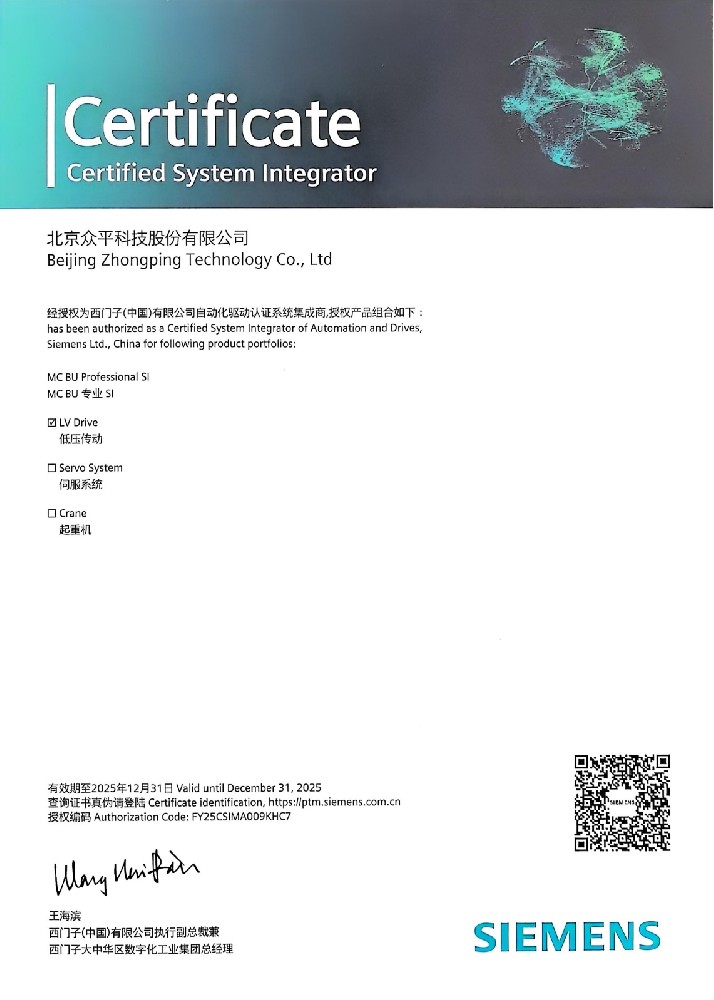
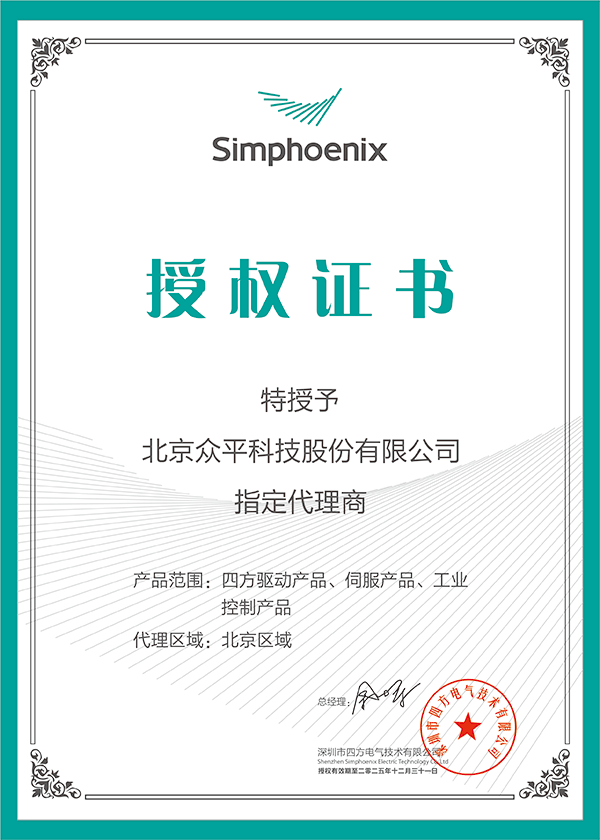
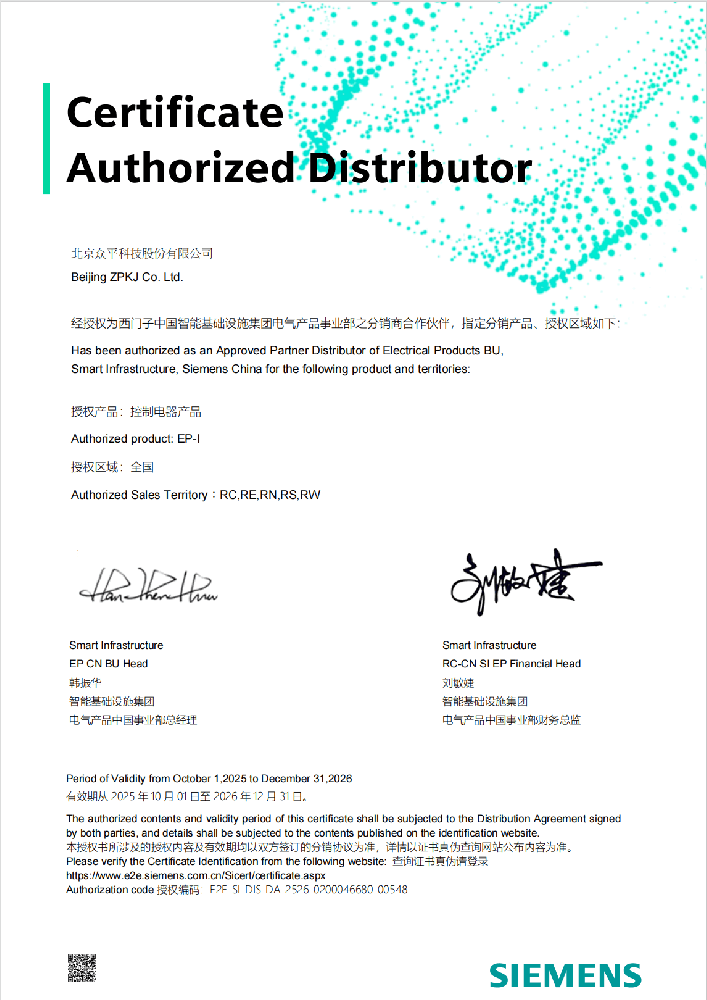
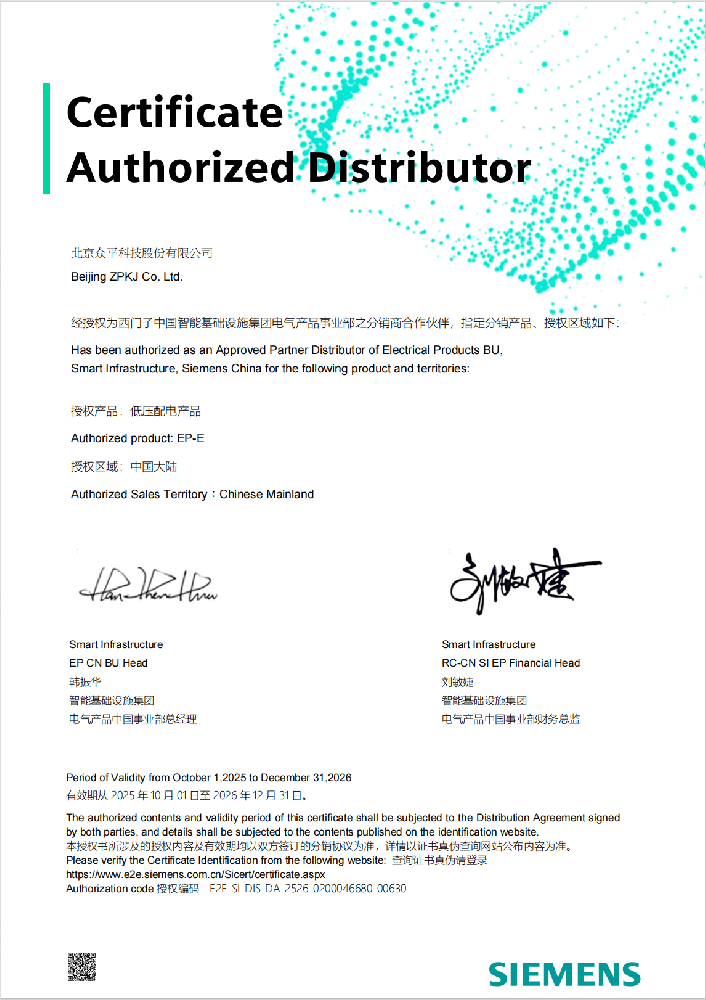
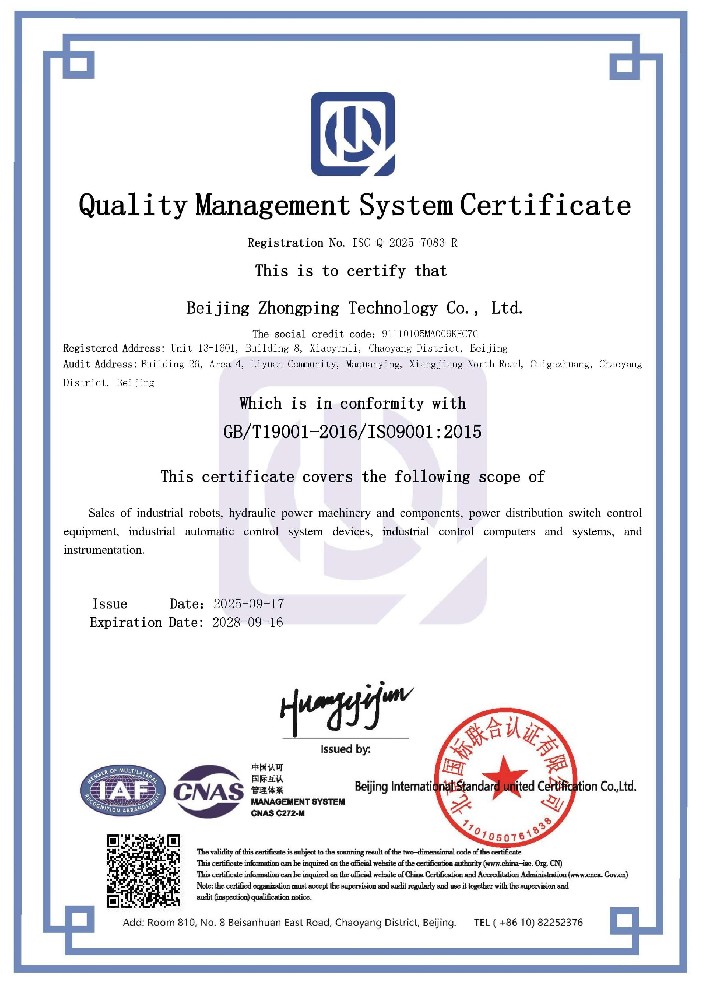
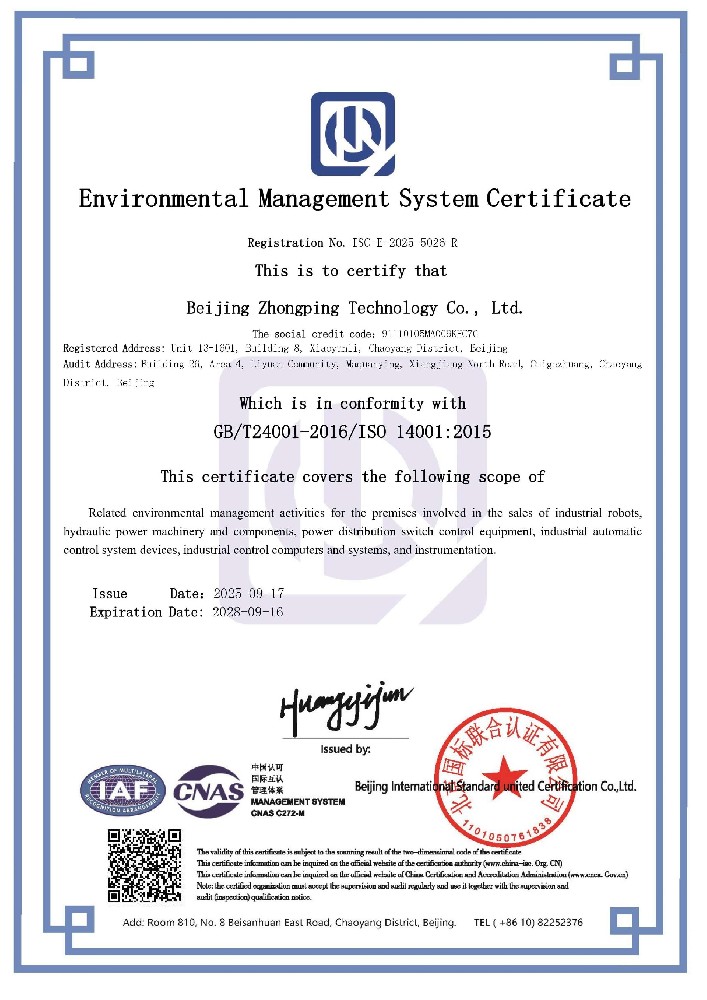
Beijing Zhongping Technology Co., LTD., is a global industrial electrical automation service provider, is a scientific research, design, marketing, technical services, industrial Internet, international import and export services as one of the science and technology companies.
2.What can you buy from us?
PLC, inverter, human-machine interface, hydraulic products, low-voltage power distribution, industrial robots and core components
3.Is the item in stock or need to be purchased from another supplier?
We have a large inventory of goods and have our own warehouse.
4.What advantages do we have over other suppliers?
Our company has a large amount of inventory and a number of warehouses, but also in the country's important industrial provinces and cities with offices and a number of overseas service points. To provide you with intelligent manufacturing one-stop comprehensive services, save efforts, labor and cost.
5.Can you provide 100% new original authentic products?
We only sell new original genuine, no renovation, no fake, only for the original factory original!
6.How long is the delivery time?
If there is a stock, it will take 2-3 working days to ship, if the quantity is large, it will take 5-7 working days after receiving the payment, if it is not a conventional model, it will take some time, we will inform you of the specific delivery time.
7.Is there technical support available?
Of course, we have a professional technical team that can help you solve technical problems.
8.How do we guarantee quality?
We have three processes to control the quality of goods.
1) Our engineers will inspect the production and quality control in the factory regularly.
2) Incoming materials shall be inspected by experienced purchasing engineers before they can be stored.
3) At least 2 people in the logistics department cross-check the goods to be sent before delivery.
9.Can you guarantee the safe and reliable delivery of your products?
Yes, we strictly adopt the international standard packing. We also use special packaging for dangerous goods, and refrigerated shipping for items with temperature requirements. Special item packaging and general cargo standard packaging requirements may incur additional costs.
10.How about the freight?
The cost depends on how you choose to get the goods. Express is usually the fastest but also the most expensive way. Sea freight is the best solution for large quantities of goods. The exact shipping cost depends on the purchase amount、quantity and weight of your order. Please feel free to contact us for more information.

 +86 010-64225983
 +8613811814778
 Building 26, Liyuan Community, Chaoyang District, Beijing, China