The GESHI YVF2EJ AC brake motor with an aluminum frame, spanning power ratings from 0.12 kW to 7.5 kW and frame sizes from H63 to H132, functions as an integrated drive solution designed to deliver both variable speed control and rapid electromagnetic braking for industrial automation machinery.
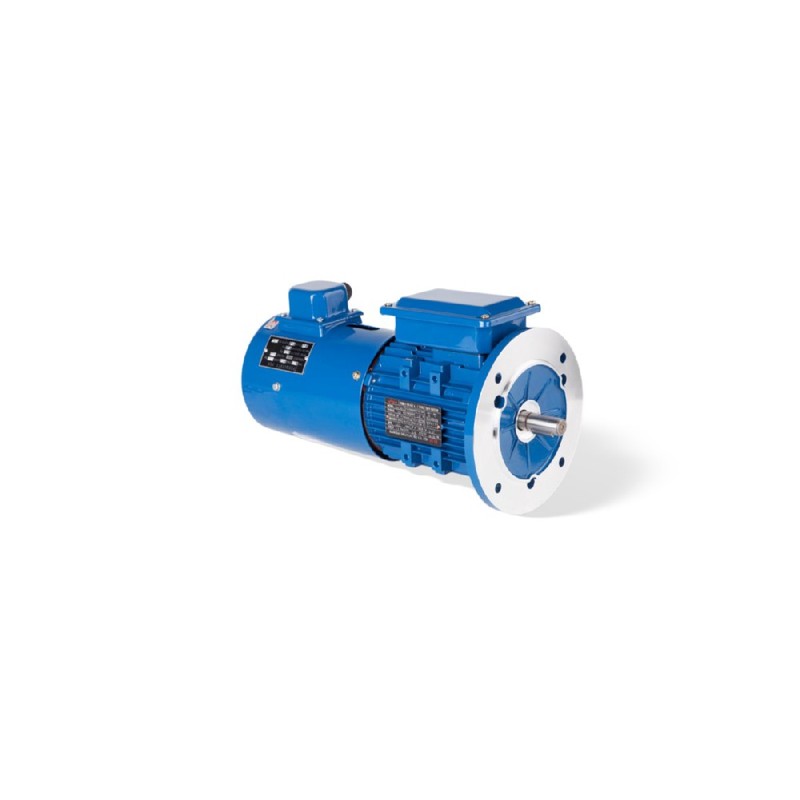
Understanding the GESHI YVF2EJ AC Brake Motor
When designing automated machinery where precise positioning must coincide with variable speed operation, engineers often face the challenge of coordinating separate motor drives and holding brakes within tight mechanical envelopes. The GESHI YVF2EJ AC brake motor solves this integration hurdle by combining a frequency inverter duty stator design with a direct-mounted electromagnetic DC or AC brake assembly. This configuration operates reliably within a variable frequency drive layer, allowing machine builders to achieve controlled acceleration and deceleration profiles without sacrificing stopping accuracy.
Targeting machine builders and electrical control panel designers in sectors such as packaging, woodworking, food processing, and chemical automation, this unit addresses the common industrial constraint where conventional induction motors fail to provide repeatable stop positions under varying load frequencies. Operating within the drive layer of a machine architecture, the motor accepts modulated frequency inputs from standard industrial frequency inverters. By decoupling thermal management limitations through an optimized aluminum frame structure, the motor maintains continuous torque output across specialized frequency bands, ensuring synchronized motion control across multi-axis automated production lines.
Typical Applications
The GESHI YVF2EJ AC brake motor is deployed across various discrete manufacturing and processing environments where dynamic speed regulation and immediate load holding are required.
Conveyor indexing systems: Used in automated material handling lines to transport parts between workstations, where the motor provides smooth acceleration and rapid braking to prevent product slippage or misalignment during stops. Packaging and wrapping machinery: Integrated into form-fill-seal equipment to control film feed rates accurately, utilizing the electromagnetic brake to lock the web position precisely when cutting or sealing operations occur. Woodworking multi-axis routers: Applied in feed mechanisms and auxiliary material positioning stages where variable frequency operation dictates feed speed, and the brake secures the axis instantly upon power interruption or cycle completion. Food processing sorting conveyors: Fitted into washdown-compatible sorting lines to regulate belt velocity dynamically while ensuring that products index to exact optical sensor locations without coasting. Chemical dispensing batch mixers: Deployed in automated fluid handling equipment where agitator speed must vary according to viscosity changes, and immediate shaft immobilization is mandatory for safety when mixing cycles terminate.
Key Features
Aluminum-housing variable frequency design: Utilizes a high-thermal-conductivity aluminum frame to dissipate heat generated by harmonic currents from inverter operation, which ensures extended winding life under non-sinusoidal voltage supplies. Dual-range frequency torque profile: Delivers constant torque performance from 5 Hz to 50 Hz and constant power delivery from 50 Hz to 100 Hz, enabling flexible machine speed tuning across wide operational ranges. Integrated fast-acting electromagnetic brake: Features a spring-applied fail-safe brake mechanism that engages immediately upon voltage decay, providing rapid stopping times for precise mechanical positioning. Flexible mounting configurations: Supports multiple mounting arrangements including B3 foot mount, B5 flange mount, B14 face mount, and combinations like B35 and B34, facilitating straightforward mechanical retrofitting. Standardized environmental protection: Built to IP54 or IP55 ingress protection ratings, guarding internal components against dust accumulation and low-pressure water splashes in harsh industrial environments. Class F thermal insulation: Employs high-grade insulation materials capable of withstanding elevated thermal thresholds, supporting rigorous duty cycles without premature dielectric breakdown.
Together, these features establish a versatile motor platform suited for general industrial machinery requiring coordinated speed control and holding torque. The balance between inverter-driven thermal resilience and mechanical braking capability allows the unit to perform reliably in repetitive start-stop applications across diverse OEM equipment classes.
Technical Specifications
Power Output: 0.12 kW - 7.5 kW @ 50 Hz
Frame Size: H63 - H132 @ Standard IEC Dimensions
Frequency Range: 5.0 Hz - 100.0 Hz @ VFD Operation
Constant Torque Range: 5.0 Hz - 50.0 Hz @ Rated Load
Constant Power Range: 50.0 Hz - 100.0 Hz @ Rated Voltage
Mounting Type: B3 / B5 / B14 / B35 / B34 @ IEC Standards
Ingress Protection: IP54 / IP55 @ IEC 60034-5
Insulation Class: Class F @ 155 °C Maximum Temperature
Efficiency Level: IE1 @ Standard Efficiency Standard
Understanding the Key Specifications
Frequency Range (5 Hz to 100 Hz): This parameter defines the operational envelope across which the motor can be safely energized by an inverter without experiencing thermal runaway. In practice, running below 5 Hz for extended periods requires auxiliary forced cooling to prevent overheating due to reduced fan velocity, while operation above 50 Hz trades torque for speed. When sizing a system, engineers must calculate the required load torque curve against the constant torque and constant power boundaries to avoid motor stalling during high-speed low-load or low-speed high-load cycles. Frame Size (H63 to H132): The IEC frame designation dictates the physical mounting dimensions, shaft height, and bolt hole patterns of the motor housing. For practical application, this ensures mechanical interchangeability with existing gearboxes or machine chassis without requiring custom adapter plates. Sizers must verify that the selected frame size aligns with the available physical envelope of the machinery, keeping mass and center of gravity limits in mind. Ingress Protection (IP54 or IP55): This rating specifies the level of environmental sealing against solid particles and moisture ingress, where IP55 provides complete protection against dust ingress and low-pressure water jets from any direction. In practice, selecting IP55 is essential for wet or dusty environments like food processing and woodworking plants to prevent internal winding contamination. Designers must evaluate cleaning protocols, such as washdown frequency, to determine whether IP55 is sufficient or if higher specialized enclosures are necessary. Insulation Class (Class F): Class F insulation signifies that the motor winding materials can withstand a maximum temperature of 155 °C without degradation of dielectric properties. For the user, this thermal headroom accommodates the localized temperature spikes induced by pulse-width modulation (PWM) voltage reflections from standard variable frequency drives. System integrators should monitor ambient operating temperatures and derate the continuous output current if the operating environment exceeds standard design assumptions.
System Integration and Hardware Setup
Integrating the GESHI YVF2EJ AC brake motor into an automated control architecture requires careful attention to electrical wiring, grounding, and signal shielding. Power connections from the variable frequency drive to the motor terminals must utilize shielded four-core motor cables to mitigate high-frequency electromagnetic interference (EMI) and capacitive leakage currents. The shield braid must make 360-degree low-impedance contact with the EMC-compliant cable glands at both the drive enclosure and the motor terminal box to suppress radiated noise emissions.
For the electromagnetic brake, a dedicated switching DC power supply or a rectifier bridge controlled by an auxiliary relay output from the PLC or VFD must be wired independently of the main motor power circuit. This ensures that brake engagement timing can be sequenced properly—releasing the brake only after the motor builds sufficient magnetic flux upon startup, and engaging the brake only after frequency output drops to zero during deceleration. Proper system grounding via a low-resistance copper conductor connected to the internal earth terminal prevents ground loops and protects personnel against hazardous touch voltages.
Reliability and Environmental Durability
The reliability of the GESHI YVF2EJ AC brake motor relies on its rugged mechanical construction and effective thermal dissipation pathways. The ribbed aluminum housing maximizes surface area, transferring internal stator heat efficiently to the ambient air even when shaft speeds drop during low-frequency inverter operation. The sealing system utilizes V-ring shaft seals or oil seals positioned at both drive and non-drive ends, preventing cutting fluids, wood dust, or fine chemical powders from entering the bearing cavities.
Bearings are pre-packed with high-temperature, oxidation-resistant grease designed to endure continuous duty cycles under varying radial and axial loads imposed by belt drives or direct couplings. Maintenance personnel should periodically inspect the brake air gap and friction disc wear to ensure consistent stopping torque throughout the operational lifecycle. By adhering to routine lubrication checks and maintaining clear airflow paths around the aluminum cooling fins, plant operators can achieve a high mean time between failures (MTBF) across demanding industrial shifts.
Selection Guidance and Alternative Options
Selecting the correct model variant within the GESHI YVF2EJ series requires matching the continuous load torque, peak acceleration requirements, and thermal duty cycle of the target application. Engineers should evaluate whether an IE1 efficiency level aligns with local energy regulations or if application duty cycles justify continuous variable frequency operation within the 5 Hz to 100 Hz envelope. For applications requiring different physical dimensions, specialized mounting flanges, or higher ingress protection levels, Beijing Zhongping Technology provides technical support to assist with cross-reference sizing, alternative model selection, and local inventory matching.
Frequently Asked Questions (FAQ)
1. What is the current stock availability and typical delivery lead time for standard frame sizes?
Beijing Zhongping Technology maintains local warehousing for standard model variants, enabling rapid order processing and same-day or next-day dispatch to minimize equipment downtime.
2. What are the terms of the warranty and the RMA procedure for this motor series?
All units are backed by a 12-month standard industrial warranty covering manufacturing defects, supported by Beijing Zhongping Technology with technical inspection and rapid replacement processing.
3. What are the electrical wiring requirements for the electromagnetic brake coil?
The brake requires a dedicated DC voltage supply, typically rectified from AC mains or driven by a specialized brake control module, ensuring rapid magnetic field collapse and fast physical engagement.
4. Can this motor operate continuously at 10 Hz without an external cooling fan?
Operating continuously below 15 Hz without auxiliary forced ventilation may lead to thermal overload due to reduced airflow from the shaft-mounted fan, requiring torque derating or an added blower.
5. What is the recommended shielding practice for cables connecting the VFD to the motor?
Use symmetrically constructed, shielded motor cables with continuous metal braiding grounded at both ends via EMC cable glands to suppress high-frequency electromagnetic interference.
6. How does the IP55 rating protect the motor in wet plant environments?
The IP55 rating prevents harmful dust accumulation and resists water jets projected by nozzles from any direction, protecting internal windings and bearings from moisture damage.
7. What routine maintenance is required for the electromagnetic brake assembly?
Maintenance technicians should periodically measure the brake air gap with a feeler gauge, inspect the friction disc for wear, and adjust the clearance according to technical specifications.
8. How does the VFD compatibility affect the motor insulation system?
Inverter operation introduces high dV/dt voltage spikes that stress winding insulation; the Class F rating provides adequate thermal and dielectric endurance against these PWM-induced harmonics.
FAQ
1.Who are We?
Beijing Zhongping Technology Co., LTD., is a global industrial electrical automation service provider, is a scientific research, design, marketing, technical services, industrial Internet, international import and export services as one of the science and technology companies.
2.What can you buy from us?
PLC, inverter, human-machine interface, hydraulic products, low-voltage power distribution, industrial robots and core components
3.Is the item in stock or need to be purchased from another supplier?
We have a large inventory of goods and have our own warehouse.
4.What advantages do we have over other suppliers?
Our company has a large amount of inventory and a number of warehouses, but also in the country's important industrial provinces and cities with offices and a number of overseas service points. To provide you with intelligent manufacturing one-stop comprehensive services, save efforts, labor and cost.
5.Can you provide 100% new original authentic products?
We only sell new original genuine, no renovation, no fake, only for the original factory original!
6.How long is the delivery time?
If there is a stock, it will take 2-3 working days to ship, if the quantity is large, it will take 5-7 working days after receiving the payment, if it is not a conventional model, it will take some time, we will inform you of the specific delivery time.
7.Is there technical support available?
Of course, we have a professional technical team that can help you solve technical problems.
8.How do we guarantee quality?
We have three processes to control the quality of goods.
1) Our engineers will inspect the production and quality control in the factory regularly.
2) Incoming materials shall be inspected by experienced purchasing engineers before they can be stored.
3) At least 2 people in the logistics department cross-check the goods to be sent before delivery.
9.Can you guarantee the safe and reliable delivery of your products?
Yes, we strictly adopt the international standard packing. We also use special packaging for dangerous goods, and refrigerated shipping for items with temperature requirements. Special item packaging and general cargo standard packaging requirements may incur additional costs.
10.How about the freight?
The cost depends on how you choose to get the goods. Express is usually the fastest but also the most expensive way. Sea freight is the best solution for large quantities of goods. The exact shipping cost depends on the purchase amount、quantity and weight of your order. Please feel free to contact us for more information.

 +86 010-64225983
 +8613811814778

 Building 26, Liyuan Community, Chaoyang District, Beijing, China