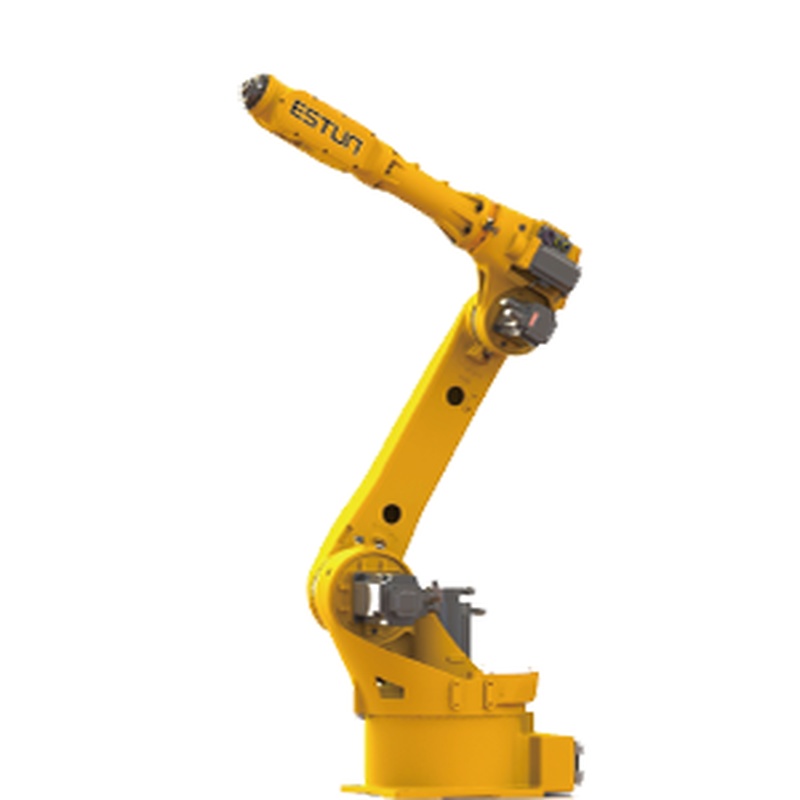
The ESTUN ER12B‑1510 6‑Axis Robotic Arm is an advanced articulated industrial robot designed to bring high‑precision automation to manufacturing processes requiring significant reach,flexible motion,and reliable payload handling.Ideal for smart factory applications where coordinated motion,repeatable accuracy,and efficient integration with industrial systems are essential,this robotic arm delivers strong performance across assembly,material handling,packaging,and inspection tasks.
Understanding the ESTUN ER12B‑1510
The ESTUN ER12B‑1510 belongs to a family of small‑load articulated industrial robots engineered for mid‑range reach and 12 kg payload capacity,making it a versatile choice for automated workcells.Featuring six controlled axes,this robot supports complex three‑dimensional trajectories and high flexibility for programming diverse part geometries.With a reach of approximately 1510 mm,the arm can operate over a large workspace footprint,serving multiple adjacent stations or various tasks on a single production line without the need for multiple devices.Its notable repeatability and motion performance make it suitable for operations where precision and time‑based efficiency matter.
Key Functional Features
Six‑Axis Motion for Flexible Automation
The ER12B‑1510 uses a six‑axis articulated design that mimics the flexibility of a human arm but in an industrial strength format.These axes allow complex positioning and multi‑orientation part handling,essential for applications such as part assembly,screw driving,tooling changeovers,and precision placement.The six degrees of freedom enable programmers to optimize motion paths for the shortest cycle times and minimal mechanical wear,contributing to both productivity and longevity.
Industrial‑Grade Precision and Repeatability
This robotic arm offers excellent repeatability,a critical metric for consistent task execution.Repeatability in the range of a few hundredths of a millimeter ensures that each operation,such as picking,placing,or assembly,occurs with minimal deviation,leading to higher yield and reduced rework.The rigid mechanical structure combined with precise servo motors provides dependable performance even during high‑frequency cycles.
Robust Protection and Integration
Designed to withstand typical industrial environments,the ER12B‑1510 features an IP54 protection class,shielding its internal components against dust and water spray.This robustness allows deployment in diverse factory conditions,including machine tending in metalworking or material handling near conveyors.Integration with standard industrial networks and control architectures empowers system integrators to connect the robot seamlessly with PLC systems,sensors,and safety I/O.
Applications Suited for the ER12B‑1510
The performance characteristics of the ER12B‑1510 make it a practical choice for numerous real‑world use cases,including but not limited to:
Automated Assembly Operations
In electronics,automotive components,and consumer product assembly,the robot can perform complex insertion,fastening,and fitting tasks reliably.Its reach and payload capacity are well suited to medium‑sized parts,enabling effective automation of operations previously done manually.
Precision Material Handling
With six axes and a large work envelope,this robot excels at material handling across multiple stations.It can transfer parts between conveyor belts,feed machines with raw material,and position components for downstream processes like inspection or packaging.
Quality Inspection and Testing
The ER12B‑1510’s accurate and repeatable motion is also an asset in quality inspection applications.By integrating machine vision systems or measurement probes,the robot can position sensors with high consistency for defect detection or dimensional verification.
How This Robot Fits Within Robotic Automation Categories
Industrial Robot vs.Collaborative Robot
Although your keywords include Collaborative Industrial Robot,the ER12B‑1510 primarily aligns with traditional industrial robotics—robust,high‑speed,and designed to function within safeguarded cells or workstations.Collaborative robots(often called cobots)are typically characterized by low inertia,integrated force‑limiting safety features,and intended for safe human‑robot interaction without extensive guarding.
By contrast,the ER12B‑1510’s industrial strength,larger payload,and dynamic range make it suitable for higher throughput automation where workspace safety is managed through physical barriers or sensor‑based zones.Understanding this distinction helps ensure the right robot type is chosen for both performance and safety planning.
Benefits of the ESTUN ER12B‑1510
The ER12B‑1510 robotic arm delivers several advantages compared to both lower‑end automation options and typical cobot solutions:
High Payload with Extended Reach:A 12 kg payload and 1510 mm reach allow handling of larger components or tools than many lightweight robots,increasing applicability.
Superior Flexibility:Six axes provide nuanced motion control and orientation,supporting a wide variety of paths and positioning strategies.
Industrial Durability:Built to operate reliably in demanding environments and high duty cycles typical of manufacturing zones.
Ease of Integration:Supports industry‑standard communication protocols and control systems,reducing integration overhead for engineering teams.
Technical Considerations for Potential Users
When planning automation projects around the ER12B‑1510,engineers and project planners should take into account:
Safety Systems:Given its industrial classification,proper safeguards such as fences,light curtains,and interlocked gates are essential to protect personnel.
Control Ecosystem:Matching the robot controller with the existing machine control hardware and PLC logic ensures smoother integration and avoids signal mismatches.
Workcell Layout Optimization:Leveraging its 1510 mm radius effectively may involve strategic positioning of fixtures and conveyors to reduce cycle times and maximize throughput.
Common Questions from Potential Customers
1.How do I decide between a traditional industrial robot like the ER12B‑1510 and a collaborative robot for my application?
Traditional industrial robots like the ESTUN ER12B‑1510 are designed for high‑speed automation within secured cells where physical guarding ensures separation between machines and workers.They typically offer higher payload capabilities and faster cycle times,making them suitable for heavy material handling,welding,or continuous production lines.Collaborative robots,in contrast,focus on safe human‑robot interaction and are often limited in speed and load for safety reasons.Choosing between them involves assessing workflow,throughput requirements,and the level of human involvement in the robot’s workspace.
2.What industries benefit most from deploying a robot such as the ER12B‑1510?
Industries such as automotive parts assembly,electronics manufacturing,consumer goods packaging,and general industrial production benefit significantly from a robot with a 12 kg payload and 6‑axis flexibility.These sectors often require repetitive precision tasks,consistent cycle times,and the ability to handle medium‑weight components efficiently.As a result,the ER12B‑1510 can reduce labor costs,improve quality,and support lean production strategies.
3.Can the ER12B‑1510 operate with third‑party vision systems or external sensors?
Yes.When properly integrated,this robot can work with machine vision cameras,laser scanners,or force/torque sensors to extend its application scope into advanced inspection or guided pick‑and‑place tasks.Successful integration usually requires compatible communication interfaces and programming frameworks that allow sensor feedback to influence robot motion.
4.How does the reach and payload combination of the ER12B‑1510 influence cell design?
The combination of a 1510 mm reach and 12 kg payload offers a balance between workspace coverage and handling capability.For workcells,this means fewer robots may be needed to cover the same operational area,and the robot can efficiently serve multiple adjacent stations.Additionally,the reach allows for ergonomic placement of tooling and parts staging areas without excessive repositioning efforts,enhancing throughput.
5.What maintenance considerations should be expected with the ER12B‑1510?
Routine maintenance includes periodic checks of mechanical coupling points,greasing or servicing gearboxes and joints as recommended by the manufacturer,and calibration checks to preserve repeatability.Preventive maintenance helps sustain high uptime and reduces unexpected downtime.Partnering with a qualified integrator or service provider can streamline maintenance scheduling and reduce lifecycle risks.
FAQ
1.Who are We?
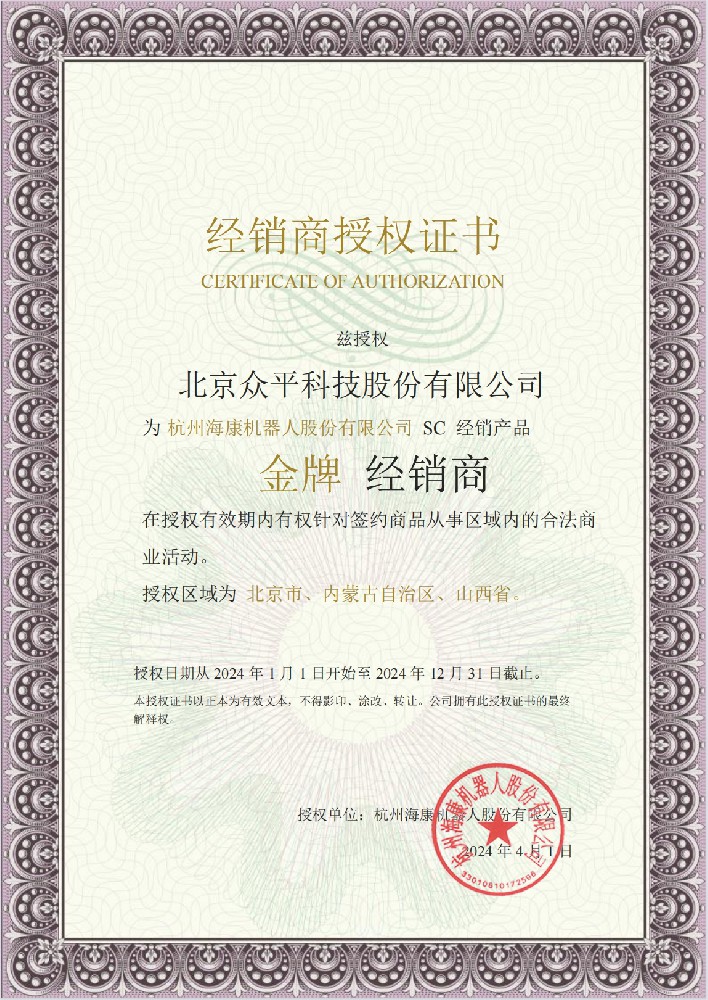
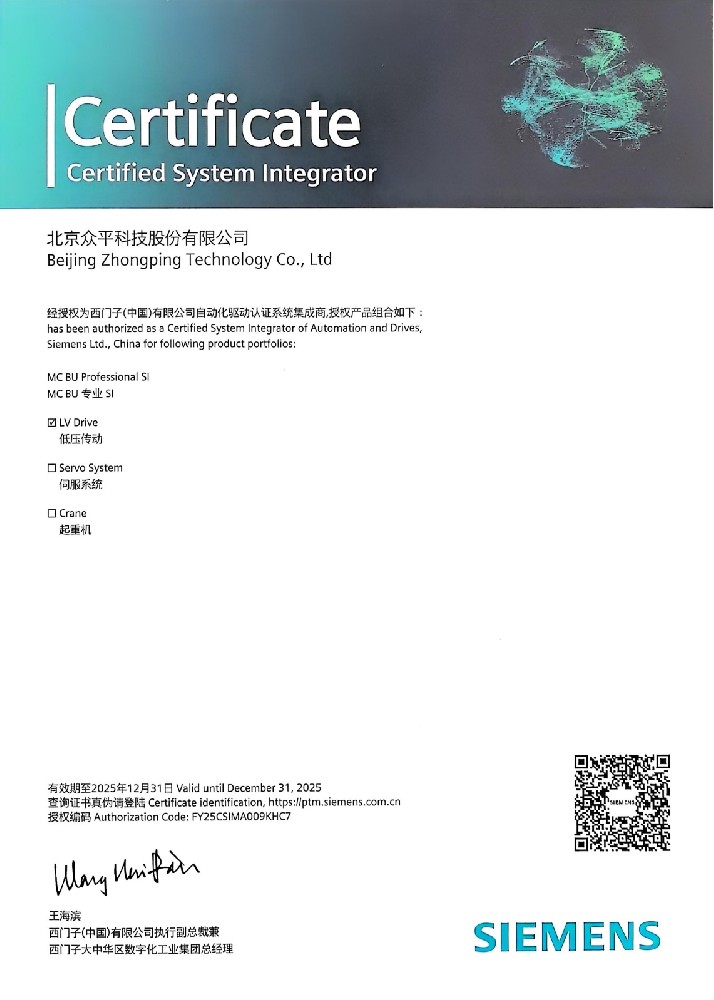
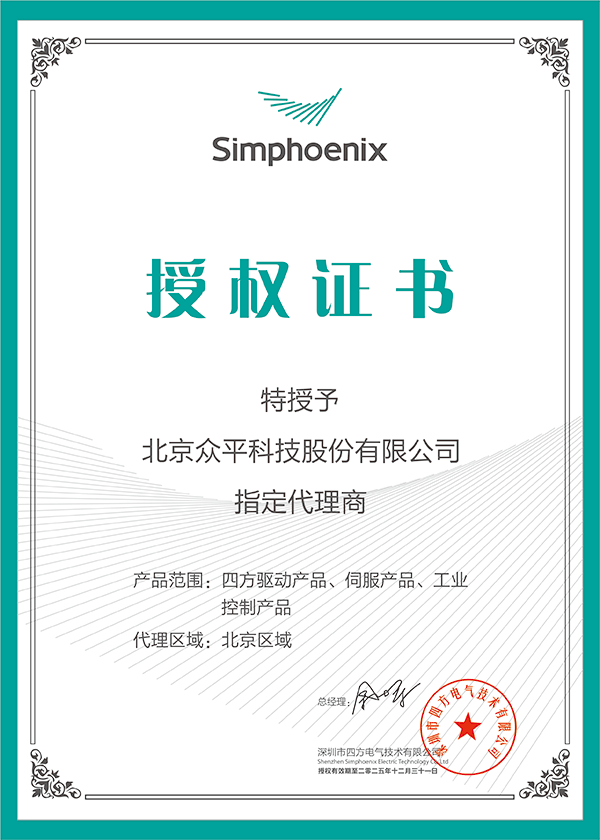
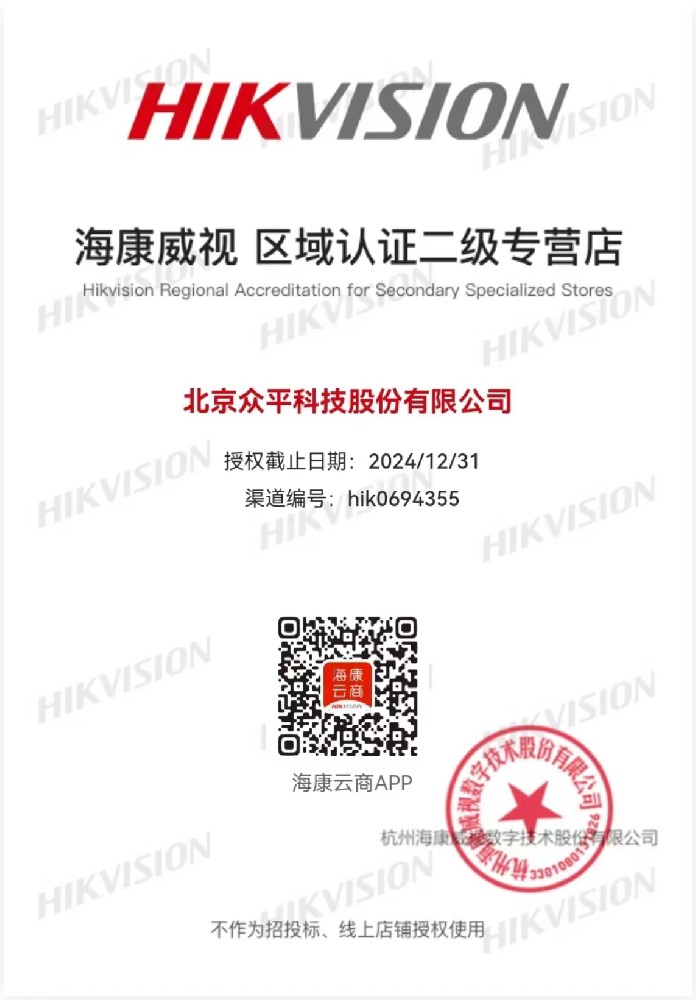
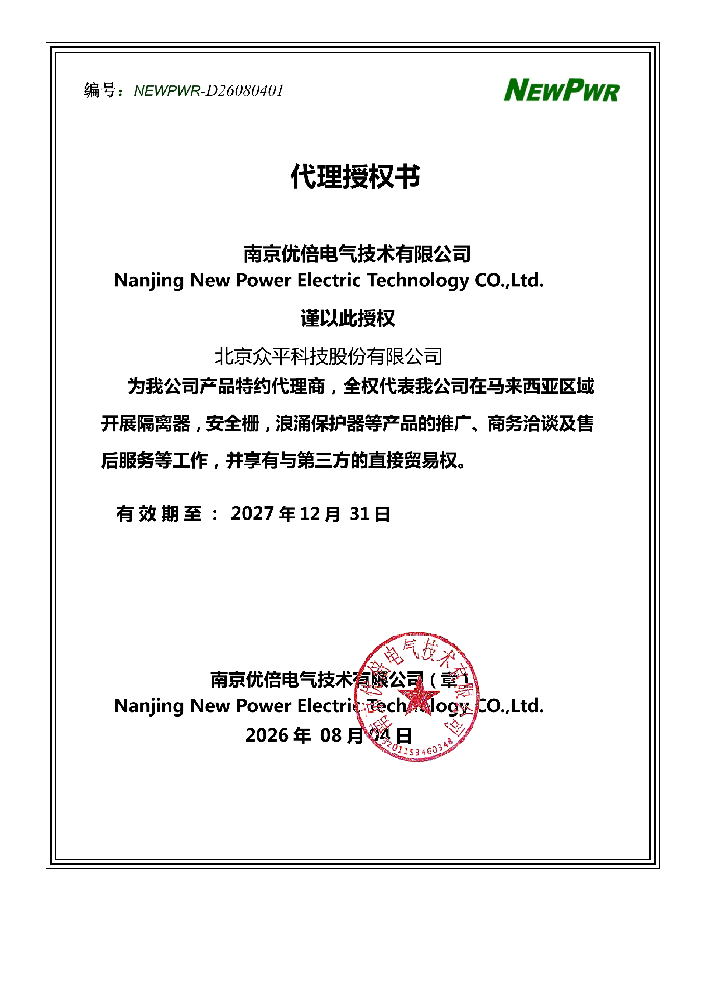
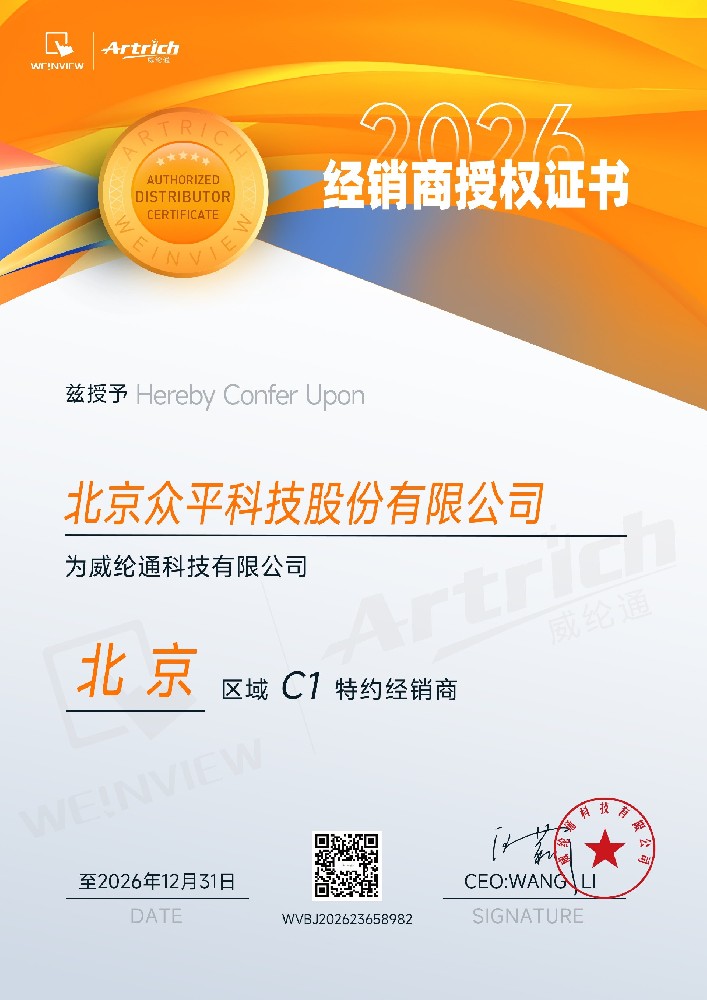
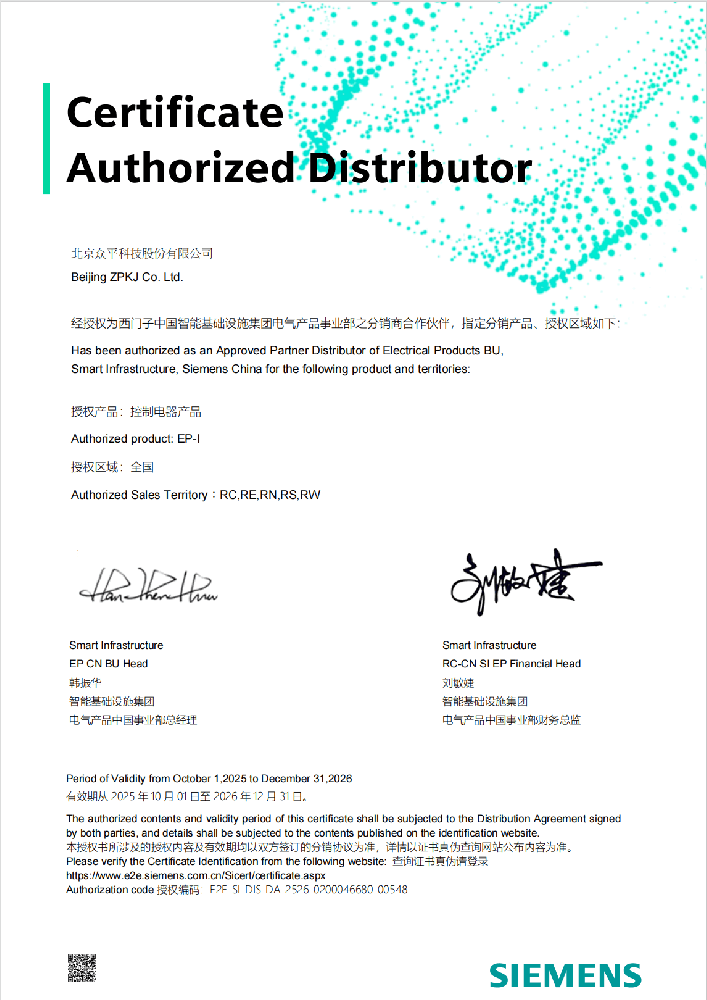
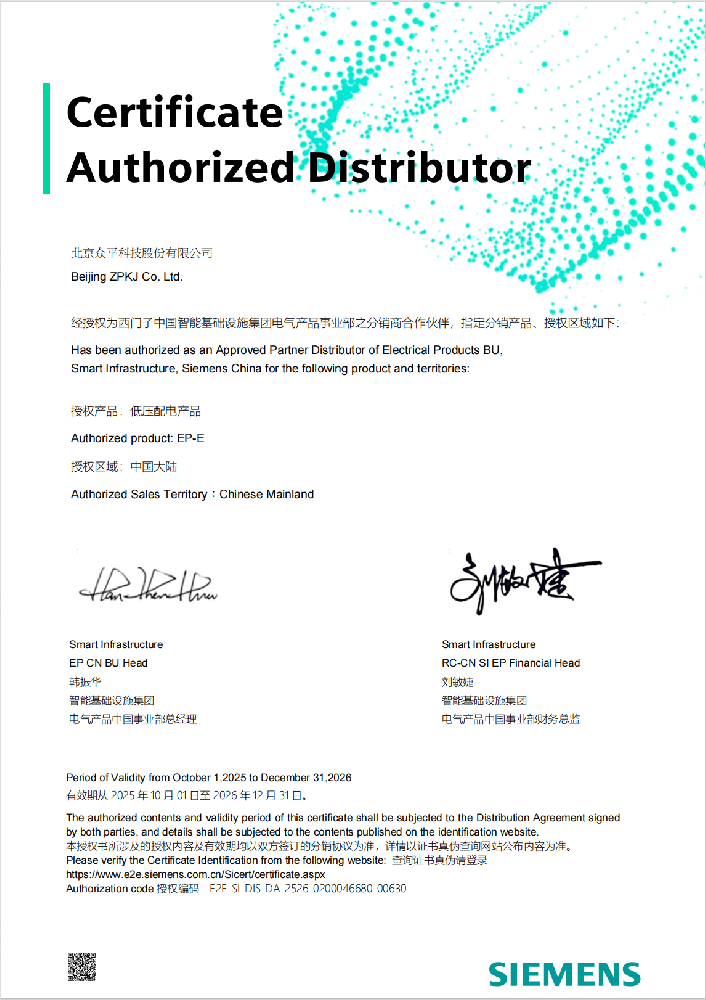
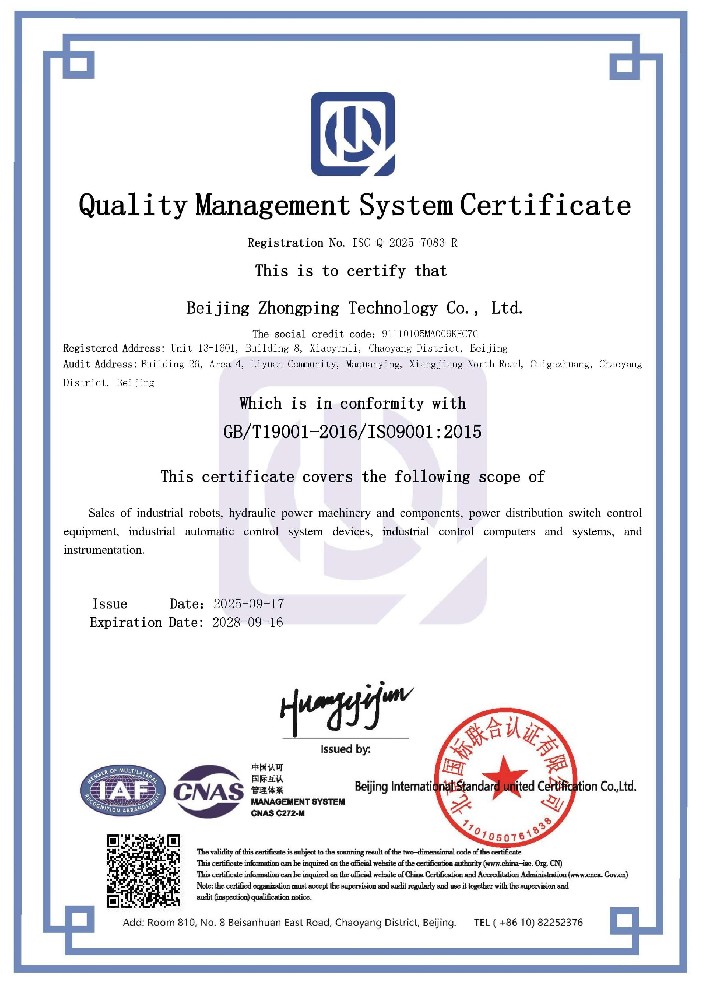
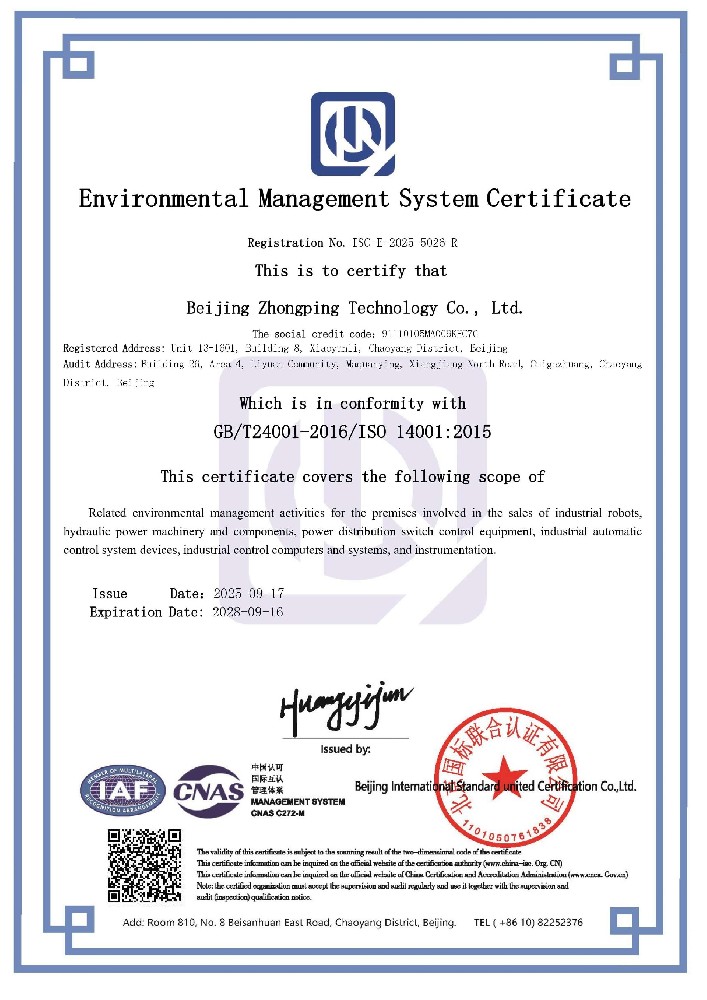
Beijing Zhongping Technology Co., LTD., is a global industrial electrical automation service provider, is a scientific research, design, marketing, technical services, industrial Internet, international import and export services as one of the science and technology companies.
2.What can you buy from us?
PLC, inverter, human-machine interface, hydraulic products, low-voltage power distribution, industrial robots and core components
3.Is the item in stock or need to be purchased from another supplier?
We have a large inventory of goods and have our own warehouse.
4.What advantages do we have over other suppliers?
Our company has a large amount of inventory and a number of warehouses, but also in the country's important industrial provinces and cities with offices and a number of overseas service points. To provide you with intelligent manufacturing one-stop comprehensive services, save efforts, labor and cost.
5.Can you provide 100% new original authentic products?
We only sell new original genuine, no renovation, no fake, only for the original factory original!
6.How long is the delivery time?
If there is a stock, it will take 2-3 working days to ship, if the quantity is large, it will take 5-7 working days after receiving the payment, if it is not a conventional model, it will take some time, we will inform you of the specific delivery time.
7.Is there technical support available?
Of course, we have a professional technical team that can help you solve technical problems.
8.How do we guarantee quality?
We have three processes to control the quality of goods.
1) Our engineers will inspect the production and quality control in the factory regularly.
2) Incoming materials shall be inspected by experienced purchasing engineers before they can be stored.
3) At least 2 people in the logistics department cross-check the goods to be sent before delivery.
9.Can you guarantee the safe and reliable delivery of your products?
Yes, we strictly adopt the international standard packing. We also use special packaging for dangerous goods, and refrigerated shipping for items with temperature requirements. Special item packaging and general cargo standard packaging requirements may incur additional costs.
10.How about the freight?
The cost depends on how you choose to get the goods. Express is usually the fastest but also the most expensive way. Sea freight is the best solution for large quantities of goods. The exact shipping cost depends on the purchase amount、quantity and weight of your order. Please feel free to contact us for more information.

 +86 010-64225983
 +8613811814778
 Building 26, Liyuan Community, Chaoyang District, Beijing, China