ESTUN S3-60 Standard:The Ideal 6-Axis Robot for Education and Training Labs
The ESTUN S3-60 Standard is a compact,high-precision 6-axis industrial robot engineered to meet the specific requirements of academic institutions and technical training
centers.With a 3kg payload and a 575.8mm reach,it provides a realistic industrial experience within a safe,classroom-friendly footprint.
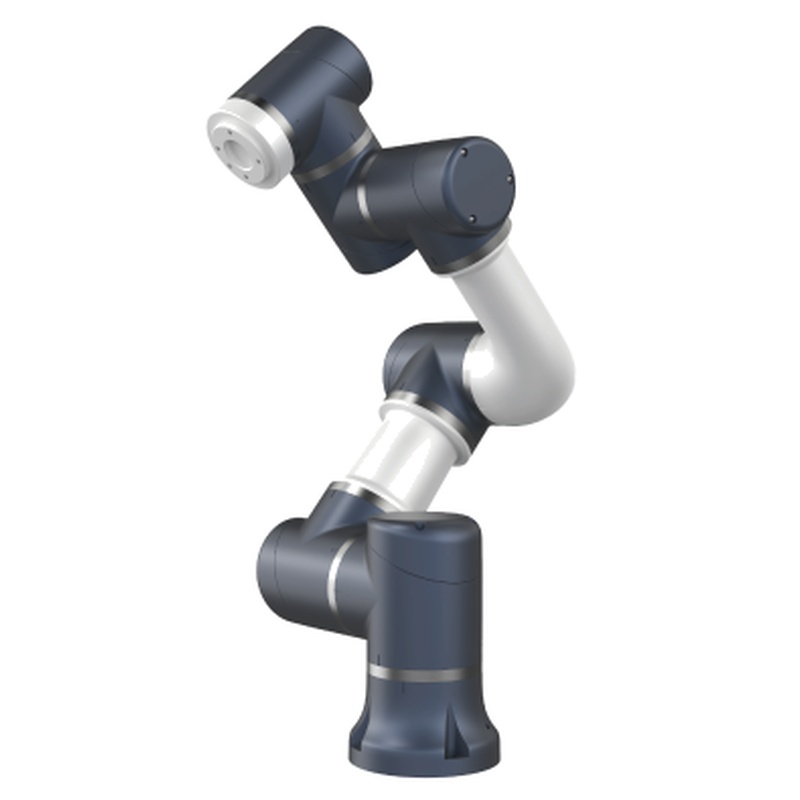
Designed as an entry point into the world of smart manufacturing,the S3-60 Standard balances sophisticated industrial performance with ease of use.It allows students and
researchers to master robot kinematics,trajectory planning,and system integration using the same technology found in high-end automotive and electronics plants.
Comprehensive Product Specifications
Degrees of Freedom(DOF):6-Axis
Rated Payload:3 kg
Maximum Reach:575.8 mm
Pose Repeatability:±0.03 mm
Maximum Tool Speed:2.0 m/s
Robot Weight:14 kg
Joint 1/2/3 Max Speed:150°/s
Joint 4/5/6 Max Speed:180°/s
Ingress Protection:IP54
Mounting Options:Floor,Ceiling,Wall
Key Features and Educational Advantages
Precision is a hallmark of the S3-60 Standard.Utilizing 20-bit absolute encoders,the robot provides granular feedback on its position,allowing students to experiment with
high-accuracy tasks such as simulated micro-assembly or precision sorting without the risk of mechanical drift.
The robot features a robust safety architecture including dual-circuit emergency stops and software-defined safety boundaries.This"Trusted Safety"design ensures that students
can learn in a controlled environment,where collision detection sensitivity can be adjusted to match the skill level of the user.
A significant advantage for education is the graphical user interface(GUI).The intuitive programming environment allows beginners to master basic motion commands within
an hour,while the support for C++,Python,and ROS(Robot Operating System)provides a powerful platform for advanced research.
Specialized Application Scenarios in Training
In vocational training labs,the S3-60 Standard serves as the primary tool for teaching industrial"pick-and-place"operations.Students learn to calibrate vision systems and
integrate end-of-arm tooling,simulating real-world packaging and quality inspection lines.
University researchers utilize the S3-60 Standard for studying advanced kinematics and Embodied AI.Its open communication architecture(Modbus TCP/EtherCAT)allows for the
implementation of custom control algorithms,making it a versatile testbed for future automation technologies.
The robot is also an essential component of"Industry 4.0"training cells.By connecting the S3-60 to PLCs,HMIs,and cloud platforms like E-Noesis,labs can demonstrate the full
lifecycle of a connected production system,from order placement to robotic execution.
Installation and Lab Setup Guidelines
The S3-60 Standard is designed for flexible mounting on standard 35mm DIN-style laboratory benches or dedicated mobile workstations.Ensure the base is securely bolted to
a stable surface to maintain the±0.03mm repeatability during high-speed motion experiments.
Electrical setup is straightforward via the compact C3E or COB control cabinet.The system operates on a standard AC 100-240V power supply,making it compatible with
ordinary classroom outlets without the need for high-voltage industrial wiring or phase converters.
Connect the teach pendant to the dedicated port and verify that the"Enable"switch(dead-man switch)is functional.For initial student exercises,it is recommended to limit the
robot's speed to 250mm/s in manual mode to ensure a safe learning curve during path teaching.
Maintenance and Lab Safety Precautions
Students must be trained to never enter the robot's physical reach while the"SERVO ON"indicator is active.Always use the teach pendant's manual mode for programming and
ensure that an emergency stop button is within easy reach of every student participating in the lab.
Periodic maintenance is minimal but essential for a long service life.Instructors should perform weekly checks on the cable integrity and the tightness of the flange mounting
bolts.The IP54 rating protects against classroom dust,but the robot should be kept away from liquids.
Always encourage students to back up their motion programs to a USB drive or local server before the end of a session.This prevents data loss and allows multiple student
groups to share the same hardware efficiently by simply reloading their specific project files.
Frequently Asked Questions(FAQ)
Is the S3-60 Standard safe for students without prior robotics experience?
The ESTUN S3-60 Standard is specifically designed with a multi-layered safety system that makes it highly suitable for beginners.It includes adjustable collision detection that
stops the robot instantly if it touches an object or a person,significantly reducing the risk of accidents during learning.
Furthermore,the robot’s software allows instructors to set"Virtual Walls"or safety zones.These invisible barriers prevent the robot arm from moving into areas where students
might be standing or where delicate laboratory equipment is located,ensuring a secure and controlled educational environment.
Every unit also comes with a dedicated teach pendant featuring an ergonomic"dead-man"enable switch.This requires the student to hold the button in a middle position to
move the robot;if they let go or squeeze too hard in a panic,the robot stops immediately.
What programming languages can be taught using the S3-60 Standard?
For beginners,the S3-60 Standard offers an intuitive graphical interface where students can drag and drop command blocks to create motion paths.This visual approach is
excellent for introducing the core concepts of robotic logic without the steep learning curve of syntax-heavy coding.
Advanced students and researchers can utilize the robot’s open API to program in professional-grade languages such as C++,C#,and Python.This allows the development of
complex algorithms for vision processing,machine learning,and sensor integration,bridging the gap to high-level engineering.
The robot also supports industrial standard communication protocols like Modbus TCP and EtherCAT.This ensures that students learn how to interface robots with PLCs and
other industrial controllers,providing them with practical skills required by modern automation employers.
How does the S3-60 Standard prepare students for a career in industry?
The S3-60 Standard uses the exact same control architecture and mechanical components as ESTUN’s larger industrial models.This means the skills students learn in the
lab—such as coordinate system calibration and trajectory optimization—are directly transferable to real-world manufacturing plants.
By working with an industrial-grade 6-axis manipulator,students gain a deep understanding of 3D spatial geometry and kinematics.They learn how to handle payloads,calculate
cycle times,and manage industrial communication,which are all critical competencies for automation engineers and technicians.
Exposure to the E-Noesis cloud platform and IoT features on the S3-60 Standard also prepares students for the"Industry 4.0"workforce.They learn how to collect and analyze
data for predictive maintenance and production monitoring,making them highly competitive in the job market.
What are the space requirements for a typical S3-60 training workstation?
One of the primary benefits of the S3-60 Standard is its compact footprint.The robot base is small enough to be mounted on a standard 800mm x 800mm laboratory table
,making it easy to fit multiple units into a single classroom or vocational training room.
The control cabinet is also designed for space efficiency and can be tucked underneath the workbench or mounted on a side rail.This leaves the tabletop clear for the robot's
workspace,the teach pendant,and any peripheral equipment like vision cameras or sorting bins.
Because the robot weighs only 14kg,it is easily portable.Many schools mount the S3-60 on a mobile cart with lockable wheels,allowing the robot to be moved between
different classrooms or stored securely in a cabinet when not in use for lab sessions.
Can the S3-60 Standard be integrated with vision systems or sensors?
Yes,the S3-60 Standard features a dedicated communication port on its end-flange,providing 24VDC power and digital I/O for direct sensor integration.This allows students to
easily mount and wire grippers,vacuum sensors,or small industrial cameras to the robot arm.
The robot’s controller is designed to handle vision-guided tasks,such as"look-and-pick"operations.Students can learn to program the robot to identify parts by color,shape,or
orientation,simulating the high-tech quality control processes used in the electronics and pharmaceutical industries.
Additionally,the system supports analog inputs and outputs,allowing for the integration of distance sensors or force gauges.This enables more advanced educational
experiments in areas like"haptic feedback"or adaptive motion control based on real-time environmental data.
What is the difference between the"Standard"and"Pro"versions for a lab?
The S3-60 Standard is the core model intended for general industrial training and education.It provides high precision and all the essential 6-axis movements needed to learn
the fundamentals of robotics,making it the most cost-effective choice for many academic budgets.
The"Pro"version typically includes enhanced features such as built-in torque sensors on all axes for more sensitive collision detection and manual"lead-through"teaching.This is
beneficial for labs focused specifically on human-robot collaboration(HRC)and advanced safety research.
For most standard vocational training and introductory engineering courses,the S3-60 Standard offers a more than sufficient performance envelope.It provides the same 20-bit
resolution and repeatability as the Pro model but at a price point that allows schools to purchase more units.
How do I update the robot's software for new educational features?
ESTUN provides regular software updates that can be easily installed via the USB port on the control cabinet.These updates often include new graphical blocks for the
programming interface,improved safety features,and expanded support for external hardware and communication protocols.
By keeping the system updated,labs can ensure they are teaching with the latest industrial standards.The modular nature of the software also means that new educational
"wizards"or templates can be added to help students master specific tasks like palletizing or circular welding.
Instructors can also access a library of pre-made project files and training modules from the ESTUN user portal.This helps educators quickly develop their curriculum and
provides students with high-quality examples of professional robot programming and system design.
What kind of end-of-arm tooling(EOAT)is recommended for training?
For educational purposes,we recommend starting with simple electric grippers or vacuum suction cups.These tools are easy for students to wire and program,providing
immediate visual feedback on the success of their pick-and-place exercises and sorting logic.
As students progress,more complex tooling such as 3D-printed custom fingers,pen holders for drawing tasks,or even small laser markers can be attached to the ISO
9409-1-50-4-M6 flange.This flexibility allows for a wide variety of creative and technical lab assignments.
It is important to teach students how to calculate the"Tool Center Point"(TCP)and the payload weight in the software.Correctly defining these parameters is a fundamental
industrial skill that ensures the robot moves accurately and the safety sensors work correctly with different tools.
Does the S3-60 Standard require special electrical installation?
No,the S3-60 Standard is designed to be"plug-and-play"in a standard classroom environment.Its control cabinet operates on a wide-range single-phase AC 100-240V power
supply,which is the same voltage used for computers and other common lab equipment.
The low power consumption(typical 0.2kW)means that multiple robots can be run on a single standard circuit breaker without overloading the building’s electrical system.This
significantly reduces the infrastructure costs for schools looking to build a new robotics lab.
However,we do recommend that the lab is equipped with a clean electrical ground to protect the robot's sensitive 20-bit absolute encoders.Proper grounding prevents static
buildup and electromagnetic interference,ensuring that the robot maintains its high precision during all lab hours.
What documentation and support are provided for educators?
Every ESTUN S3-60 Standard is accompanied by a comprehensive set of manuals,including a detailed hardware guide,a programming manual,and a safety handbook.These
documents are written in clear technical English,making them excellent primary resources for student reading assignments.
ESTUN also provides 3D models(STEP files)of the robot,which are invaluable for teaching offline programming and simulation.Students can use these models in CAD software
to design their own workcells and fixtures before they ever touch the physical robot in the lab.
Furthermore,technical support and teacher training sessions are often available through authorized ESTUN education partners.This ensures that lab instructors are confident in
operating the equipment and can effectively troubleshoot any common issues that may arise during student use.
FAQ
1.Who are We?
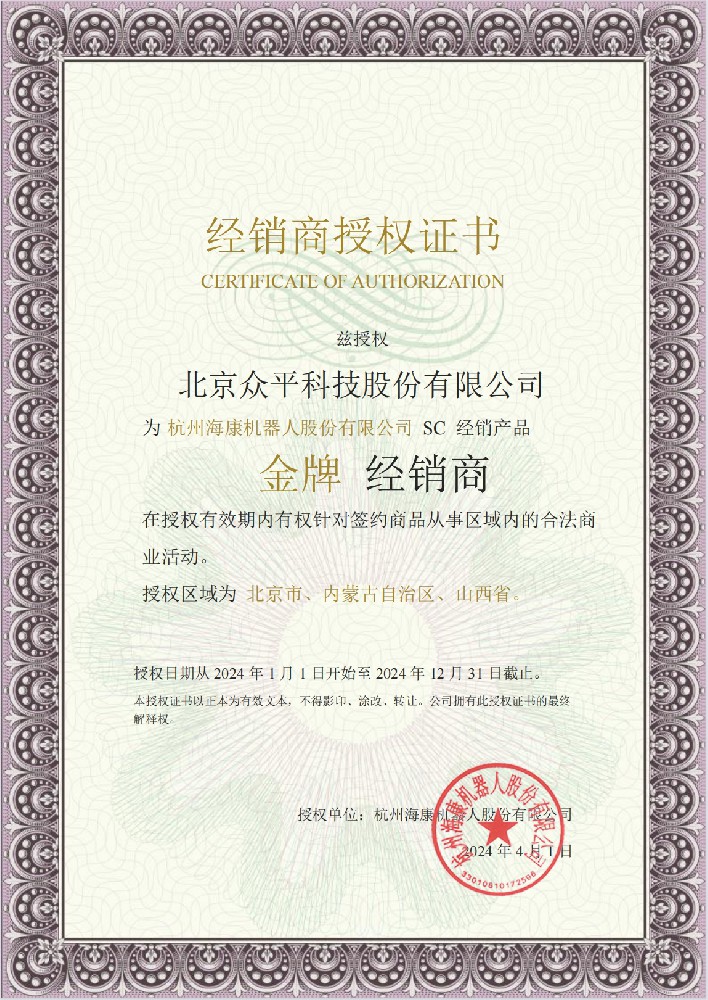
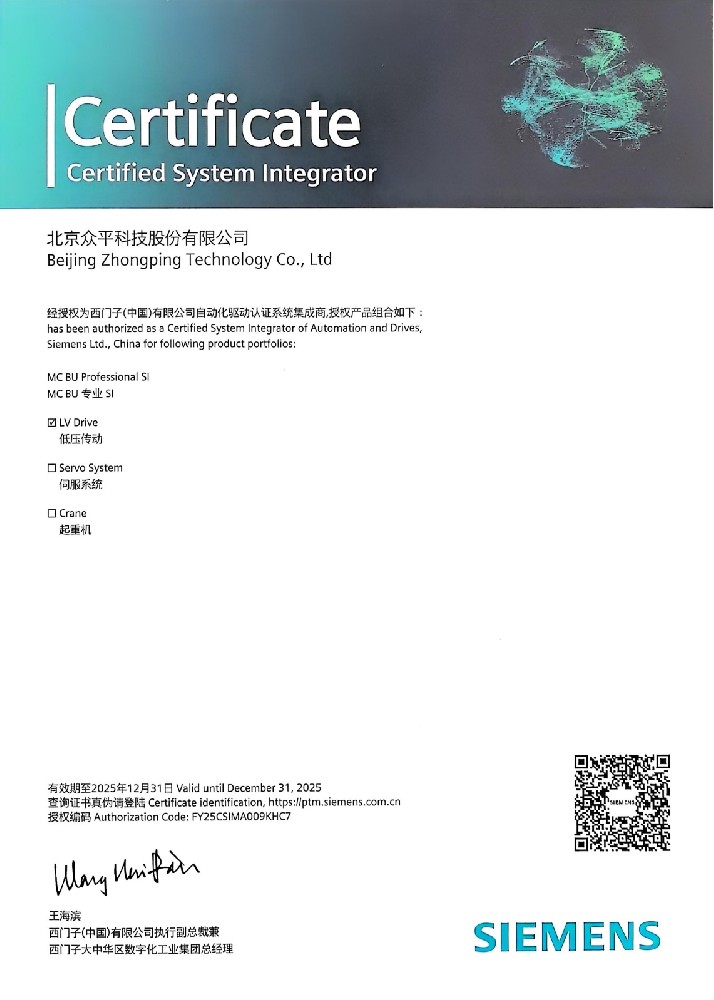
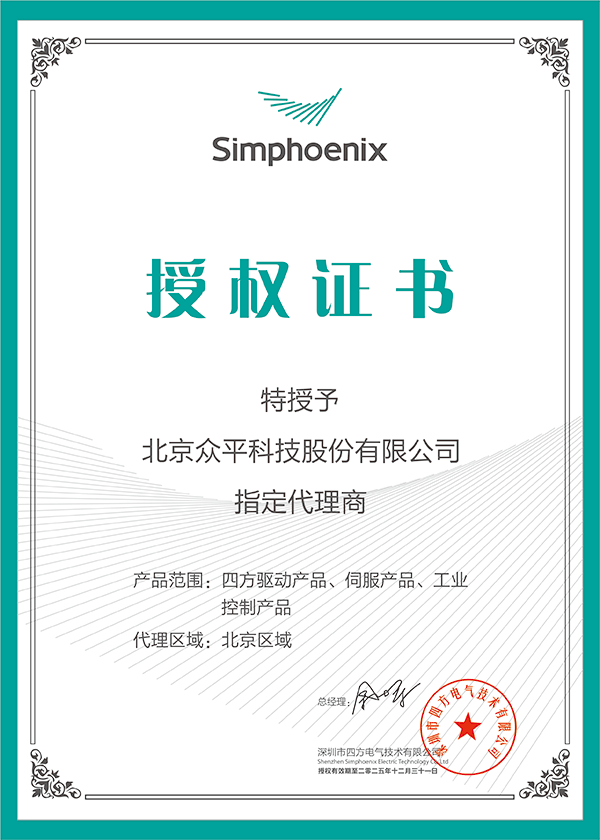
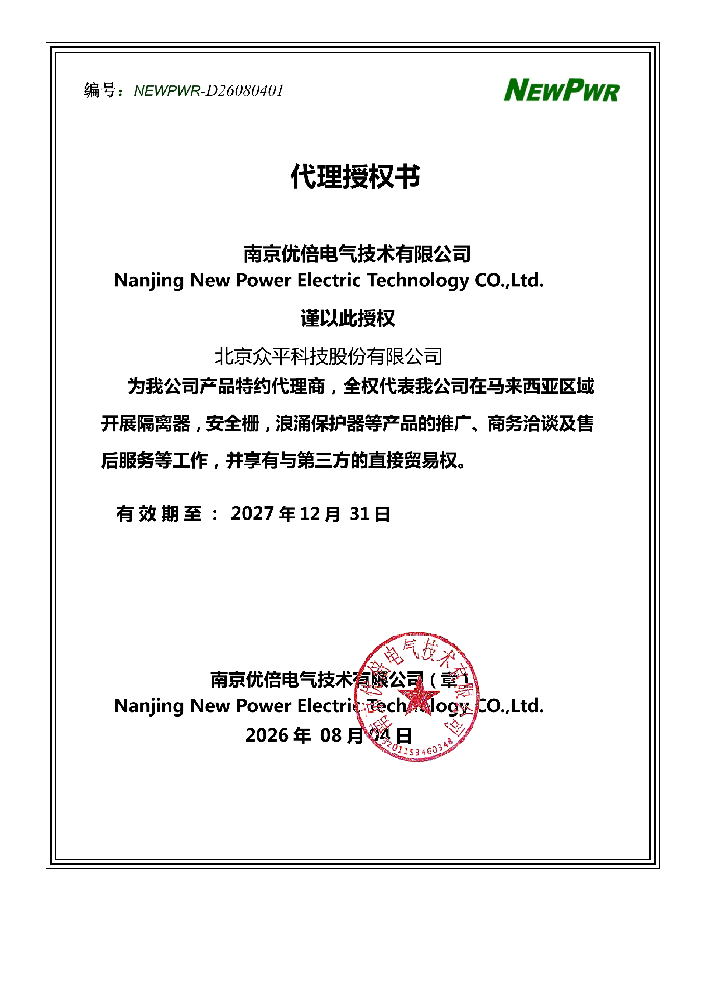
Beijing Zhongping Technology Co., LTD., is a global industrial electrical automation service provider, is a scientific research, design, marketing, technical services, industrial Internet, international import and export services as one of the science and technology companies.
2.What can you buy from us?
PLC, inverter, human-machine interface, hydraulic products, low-voltage power distribution, industrial robots and core components
3.Is the item in stock or need to be purchased from another supplier?
We have a large inventory of goods and have our own warehouse.
4.What advantages do we have over other suppliers?
Our company has a large amount of inventory and a number of warehouses, but also in the country's important industrial provinces and cities with offices and a number of overseas service points. To provide you with intelligent manufacturing one-stop comprehensive services, save efforts, labor and cost.
5.Can you provide 100% new original authentic products?
We only sell new original genuine, no renovation, no fake, only for the original factory original!
6.How long is the delivery time?
If there is a stock, it will take 2-3 working days to ship, if the quantity is large, it will take 5-7 working days after receiving the payment, if it is not a conventional model, it will take some time, we will inform you of the specific delivery time.
7.Is there technical support available?
Of course, we have a professional technical team that can help you solve technical problems.
8.How do we guarantee quality?
We have three processes to control the quality of goods.
1) Our engineers will inspect the production and quality control in the factory regularly.
2) Incoming materials shall be inspected by experienced purchasing engineers before they can be stored.
3) At least 2 people in the logistics department cross-check the goods to be sent before delivery.
9.Can you guarantee the safe and reliable delivery of your products?
Yes, we strictly adopt the international standard packing. We also use special packaging for dangerous goods, and refrigerated shipping for items with temperature requirements. Special item packaging and general cargo standard packaging requirements may incur additional costs.
10.How about the freight?
The cost depends on how you choose to get the goods. Express is usually the fastest but also the most expensive way. Sea freight is the best solution for large quantities of goods. The exact shipping cost depends on the purchase amount、quantity and weight of your order. Please feel free to contact us for more information.

 +86 010-64225983
 +8613811814778
 Building 26, Liyuan Community, Chaoyang District, Beijing, China