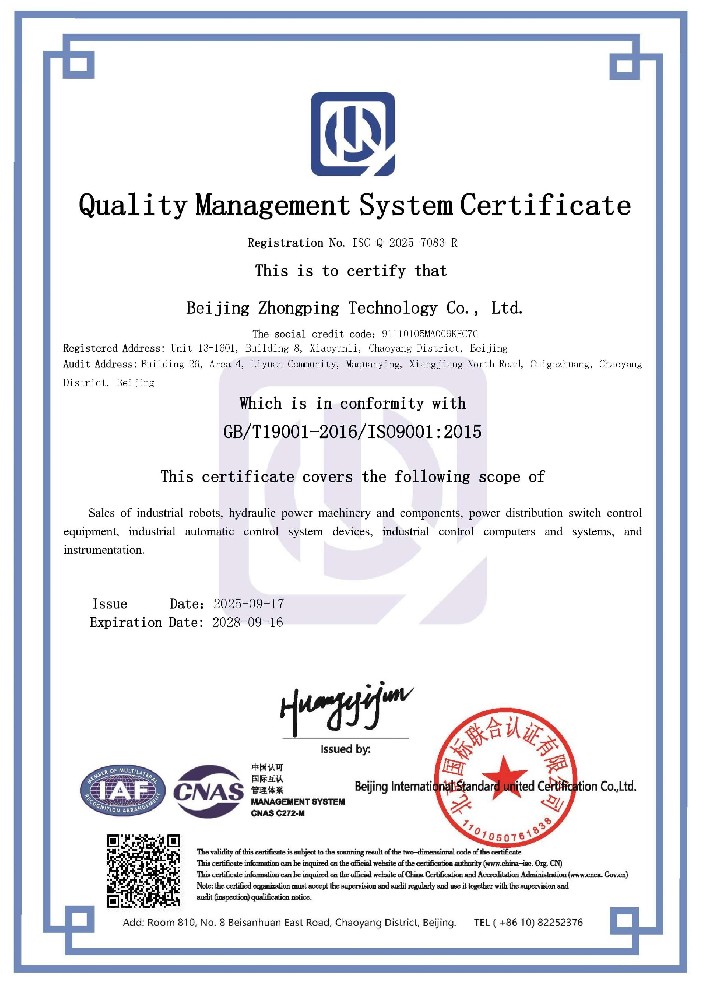
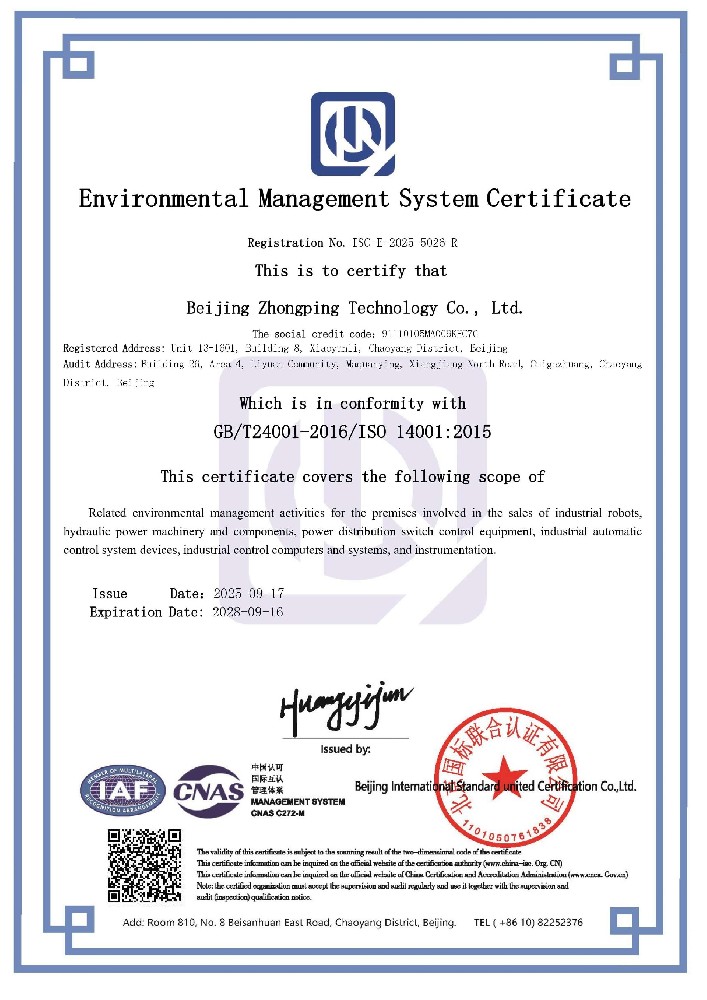
The 10kV Type 13 cast-resin distribution transformer delivers reliable power conversion with a 630-2500 kVA capacity, engineered to satisfy GB20052-2024 Energy Efficiency Grade 3 standards. This oil-free, fire-safe dry-type unit incorporates vacuum-cast foil windings to ensure low operational loss and robust short-circuit resistance. Beijing Zhongping Technology supplies this unit to meet demanding indoor distribution requirements across commercial and industrial facilities.
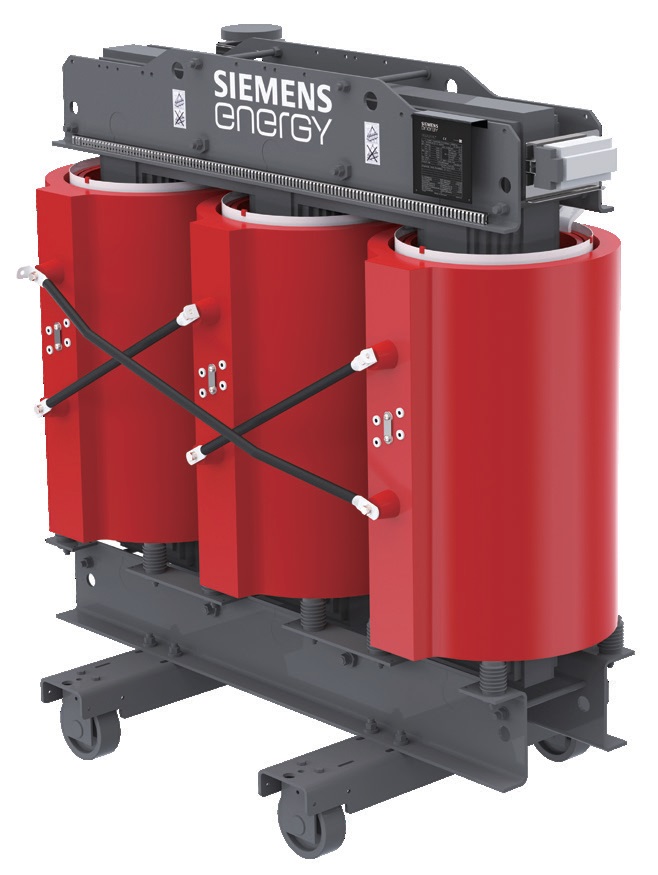
Modern electrical distribution installations face strict constraints regarding fire safety, spatial limitations, and energy efficiency. Traditional oil-immersed transformers present fire containment risks in high-density urban environments, necessitating liquid-free alternatives that can be installed directly adjacent to load centers. This cast-resin dry-type transformer utilizes advanced epoxy vacuum-casting technology to encapsulate windings, creating a moisture-resistant and flame-retardant structure. By eliminating combustible insulating oils, the unit removes the need for external fire walls or oil collection pits, simplifying substation layout design in commercial complexes and data centers.
Technical Specifications
Rated Capacity: 630 kVA - 2500 kVA @ 50 Hz / 60 Hz
Primary Voltage: 10 kV @ Rated Tap
Secondary Voltage: 0.4 kV @ No-Load
Efficiency Level: GB20052-2024 Grade 3 (NX3) @ 75 °C Reference Temperature
Vector Group: Dyn11 or Yyn0 @ Standard Configuration
Cooling Method: AN (Air Natural) or AF (Air Forced) @ Optional Fan Operation
Winding Material: Copper or Aluminum Foil @ HV/LV Coils
Insulation System: Class F / H @ Temperature Rise Limits
Enclosure Protection Class: IP20 / IP21 @ Indoor Standard (IP23 Optional)
Impedance Voltage: 4.0% - 6.0% @ Rated Tap and 75 °C
System Integration and Hardware Setup
Mechanical installation requires positioning the transformer base on a leveled concrete foundation or structural steel platform, utilizing integrated bi-directional swivel wheels for precise alignment before final anchoring. Enclosure selection typically defaults to IP20 or IP21 for indoor distribution rooms, while optional IP23 or higher enclosures accommodate semi-outdoor environments against falling debris and dripping water. High-voltage connections utilize standard terminal blocks or elbow cable plugs, while low-voltage terminations accommodate multiple parallel cables or rigid copper busbars. The off-circuit tap-link operates within a plus/minus 5% or plus/minus 2 times 2.5% adjustment range, and adjustments must only occur when the system is completely de-energized. Temperature monitoring interfaces feature embedded PT100 platinum thermal sensors within the low-voltage windings, linked to a dedicated controller providing alarm and trip relay outputs alongside optional RS485 or 4-20mA remote transmission loops and cooling-fan power supplies.
Substation room layout practices dictate that high-voltage cables route through bottom entry cable trenches or top entry cable trays, maintaining physical separation from low-voltage circuits. Power cables and temperature signal control wiring must run in separate metallic conduits using shielded conductors to prevent electromagnetic interference. Low-voltage busbars connect via flexible expansion links to absorb thermal expansion and mechanical vibration stress during load fluctuations, while mechanical strain-relief fittings secure all incoming and outgoing cables at the terminal interfaces. Proper grounding of the enclosure frame, core assembly, and neutral points must follow strict IEC and local electrical installation codes to eliminate potential ground loops and ensure operational safety.
Working Principle and Performance Design
The structural design of the winding and insulation system utilizes high-grade materials to optimize electrical and thermal performance. The high-voltage winding employs foil conductors and insulating foil tape wound in layers, subjected to vacuum-casting with epoxy resin inside a heated mold. This vacuum degassing process yields extremely low partial discharge values, while the matched thermal expansion coefficients of the conductor and resin matrix provide exceptional crack-resistance under heavy thermal cycling, exceeding the overload endurance of standard impregnated coils. The low-voltage winding utilizes copper or aluminum foil layers insulated with inter-layer materials, oven-cured into a solid monolithic cylinder that resists moisture ingress and delivers high dynamic stability under fault short-circuit conditions. Because the foil-winding structure achieves one turn per layer, the voltage stress between adjacent turns equals the turn-to-turn voltage, yielding superior impulse and power-frequency voltage withstand capabilities compared to conventional round-wire wound configurations.
Performance design characteristics focus on efficiency, loss minimization, and environmental safety. The oil-free epoxy-cast construction ensures inherent fire safety and maintenance-free operation by eliminating fluid sampling, filtration, or replacement cycles. The grain-oriented silicon-steel three-limb core structure combines with the foil windings to reduce core losses and audible acoustic noise levels. Cooling operates via natural air convection (AN) or forced air cooling (AF) utilizing optional fans to expand short-term overload capacity. Short-circuit impedance and vector configurations such as Dyn11 or Yyn0 facilitate smooth parallel transformer operation and manage fault current contributions. Efficiency progression models link Type 13 units to national Grade 3 equivalents, while advanced tiers such as NX2 (Grade 2) and NX1 (Grade 1) achieve stepwise reductions in load and no-load losses.
Application Scenarios and Selection Guide
Application suitability varies across specific industrial and commercial environments. Data centers, hospitals, and high-rise commercial complexes prioritize low noise emissions, certified fire safety, and compact indoor installation parameters located close to primary load distribution panels. Industrial manufacturing plants, rail transit networks, and port facilities require robust compact substations integrated with high-voltage and low-voltage switchgear assemblies designed for minimal physical footprint. Renewable energy installations, marine vessels, and offshore platforms demand specialized corrosion-resistant configurations capable of withstanding severe vibration and atmospheric salinity. Selection parameters for each environment must evaluate acoustic output limits, enclosure protection ratings, energy efficiency mandates, and available spatial dimensions.
The formal selection path follows a sequential engineering logic: determining primary system voltage levels across 10 kV, 20 kV, or 35 kV tiers, matching apparent power capacity requirements, selecting the appropriate efficiency series from Type 13 (NX3) up to high-efficiency NX1 variants, defining enclosure and mounting parameters for indoor or outdoor deployment, and verifying ambient environmental factors including altitude, maximum ambient temperature, and ventilation capacity. Compliance verification references established standards such as GB, IEC, and ANSI, incorporating type test reports covering lightning impulse voltage tests, temperature rise tests, and short-circuit mechanical withstand verification. Special engineering requirements can integrate optional accessories such as on-load tap changers, rectifier duty designs, dual low-voltage output windings, or water-cooling interfaces.
Frequently Asked Questions (FAQ)
1. What is the standard local stock availability and dispatch lead time for this distribution transformer?
Beijing Zhongping Technology maintains regional distribution inventory for standard capacity ratings, enabling rapid dispatch workflows to minimize project downtime.
2. What warranty coverage and RMA return processes apply to this equipment?
Units are backed by a comprehensive 12-month operational warranty supported by pre-shipment factory inspection records and technical RMA resolution paths managed through Beijing Zhongping Technology.
3. What are the electrical connection and grounding requirements for the 10 kV primary side?
High-voltage cables must be terminated using compatible separable connectors or cable lugs, with the transformer core, frame, and neutral solidly grounded to a dedicated station earth grid with resistance below 4 ohms.
4. How does the Dyn11 vector group configuration behave under unbalanced secondary loads?
The delta-connected primary and wye-connected secondary with a neutral return path accommodates up to 100% single-phase unbalanced loading on the low-voltage side without shifting neutral voltage stability.
5. What environmental conditions dictate the selection of an IP23 or higher enclosure?
Environments subject to airborne dust accumulation, high humidity, or incidental vertical liquid dripping require an upgraded protective enclosure to maintain internal insulation integrity.
6. How is thermal protection managed during sustained overload operation?
Embedded PT100 sensors monitor winding temperatures continuously, triggering warning signals at 90 °C, starting cooling fans at 100 °C, and initiating automatic circuit breaker tripping at 110 °C.
7. What routine maintenance procedures are required for cast-resin dry-type transformers?
Routine maintenance involves periodic dust removal from winding cooling ducts using dry compressed air, inspecting terminal torque connections, and verifying temperature controller display calibration.
8. Can this transformer be integrated into automated power monitoring systems?
The digital temperature controller includes standard communication ports that transmit real-time thermal data and alarm states directly to supervisory SCADA or PLC networks via Modbus protocols.
FAQ
1.Who are We?
Beijing Zhongping Technology Co., LTD., is a global industrial electrical automation service provider, is a scientific research, design, marketing, technical services, industrial Internet, international import and export services as one of the science and technology companies.
2.What can you buy from us?
PLC, inverter, human-machine interface, hydraulic products, low-voltage power distribution, industrial robots and core components
3.Is the item in stock or need to be purchased from another supplier?
We have a large inventory of goods and have our own warehouse.
4.What advantages do we have over other suppliers?
Our company has a large amount of inventory and a number of warehouses, but also in the country's important industrial provinces and cities with offices and a number of overseas service points. To provide you with intelligent manufacturing one-stop comprehensive services, save efforts, labor and cost.
5.Can you provide 100% new original authentic products?
We only sell new original genuine, no renovation, no fake, only for the original factory original!
6.How long is the delivery time?
If there is a stock, it will take 2-3 working days to ship, if the quantity is large, it will take 5-7 working days after receiving the payment, if it is not a conventional model, it will take some time, we will inform you of the specific delivery time.
7.Is there technical support available?
Of course, we have a professional technical team that can help you solve technical problems.
8.How do we guarantee quality?
We have three processes to control the quality of goods.
1) Our engineers will inspect the production and quality control in the factory regularly.
2) Incoming materials shall be inspected by experienced purchasing engineers before they can be stored.
3) At least 2 people in the logistics department cross-check the goods to be sent before delivery.
9.Can you guarantee the safe and reliable delivery of your products?
Yes, we strictly adopt the international standard packing. We also use special packaging for dangerous goods, and refrigerated shipping for items with temperature requirements. Special item packaging and general cargo standard packaging requirements may incur additional costs.
10.How about the freight?
The cost depends on how you choose to get the goods. Express is usually the fastest but also the most expensive way. Sea freight is the best solution for large quantities of goods. The exact shipping cost depends on the purchase amount、quantity and weight of your order. Please feel free to contact us for more information.

 +86 010-64225983
 +8613811814778
 Building 26, Liyuan Community, Chaoyang District, Beijing, China